

Sharp chest pain is scary. Your first thought is often “is this my heart?”
But most chest pain isn’t cardiac. It’s gas.
Gas builds up in your digestive tract. It presses on nerves near your chest. The result can feel exactly like a heart attack.
This guide helps you tell the two apart. It also covers fast relief and the red flags you should never ignore.
What Does Gas Pain in the Chest Feel Like?
Gas pain usually shows up with a specific pattern. It’s rarely just “chest pain” alone.
- Sharp, jabbing, or cramp-like pain that comes in waves
- Pain that shifts location as gas moves through the gut
- Bloating or a tight, “full” feeling in the belly
- Relief after burping or passing gas
- Often triggered soon after a meal
Gas Pain vs Heart Attack: How to Tell the Difference
This is the question that matters most, so here’s a side-by-side comparison.
| Feature | Gas Pain | Heart Attack |
| Pain type | Sharp, stabbing, crampy | Pressure, squeezing, heaviness |
| Location | Shifts around chest/abdomen | Center or left chest, may radiate |
| Radiates to | Rarely spreads far | Arm, jaw, neck, back |
| Relief | Burping, passing gas, walking | Does not ease with position or gas |
| Duration | Comes and goes in minutes | Lasts several minutes or longer |
| Other symptoms | Bloating, burping, flatulence | Sweating, dizziness, breathlessness |
| Trigger | Usually after eating | Can occur with exertion or at rest |
Doctors see this confusion often. As Cleveland Clinic gastroenterologist Dr. Christine Lee puts it, when trapped gas can’t pass through normally, “it can travel north and end up as chest discomfort.”
That overlap is common. According to Medical News Today, more than 60% of people evaluated for chest pain in one 2018 study turned out to have non-cardiac causes.
Still, a table can only guide you. It can’t diagnose you. When in doubt, treat it as an emergency.
What Causes Gas-Induced Chest Pain?
- Dietary choices: Beans, lentils, cruciferous vegetables, carbonated drinks, and dairy all increase gas production.
- Swallowed air: Eating fast, chewing gum, or using a straw pushes extra air into your gut.
- Digestive disorders: IBS, lactose intolerance, and acid reflux (GERD) all raise gas and bloating.
- Constipation: Trapped stool blocks gas from passing, so pressure builds upward toward the chest.
How to Relieve Trapped Gas in the Chest Fast
- Walk it out: Gentle movement helps gas travel through the digestive tract.
- Try an OTC remedy: Simethicone or antacids can bring quick relief.
- Change position: Lying on your left side or sitting upright can ease pressure.
- Sip warm water: Warm fluids help relax the gut and move gas along.
- Slow down at meals: Eating slowly reduces swallowed air.
When Chest Pain Is a Medical Emergency
Call for emergency help immediately if chest pain comes with any of these:
- Pain lasting more than 15 minutes and not easing
- Pain spreading to the arm, jaw, neck, or back
- Cold sweat, dizziness, or nausea
- Shortness of breath, even at rest
- A feeling of heavy pressure or “an elephant on the chest”
Never wait it out if these signs appear. Get to the nearest emergency room.
How Doctors Find the Real Cause of Your Chest Pain
If chest pain keeps coming back, don’t self-diagnose. A proper workup rules out the dangerous causes first, then treats the real one.
- An ECG checks your heart’s electrical activity in minutes.
- An ECHO looks at how well your heart is pumping.
- An abdominal USG checks your stomach, intestines, and other organs for issues.
- An endoscopy examines your digestive tract directly if reflux or ulcers are suspected.
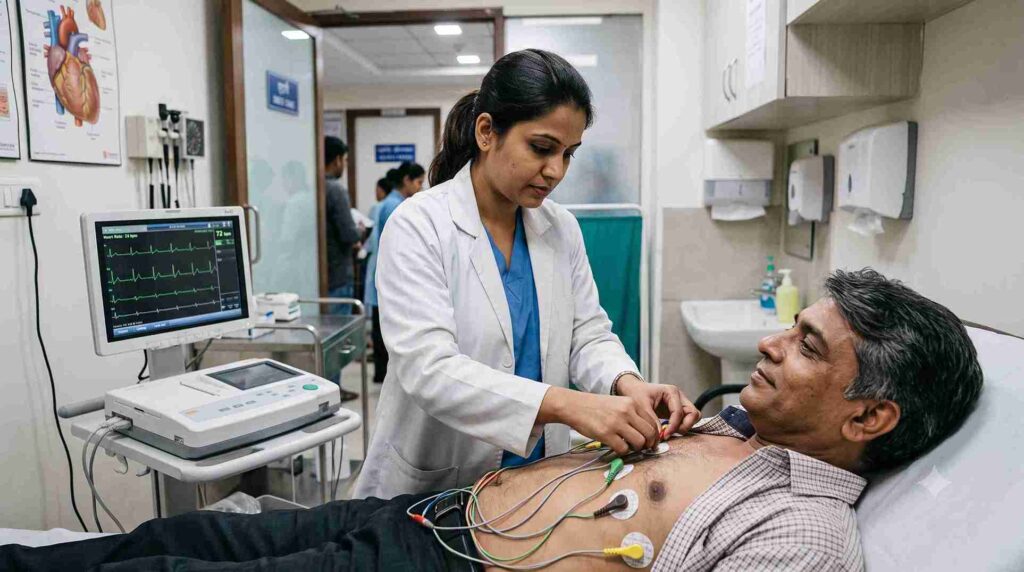
If you’re due for a general check, a health home package covers routine screening from your own home.
Conclusion: Don’t Guess — Get It Checked
Chest pain from gas is common, uncomfortable, and usually harmless. But it can mimic serious heart conditions closely enough to fool even careful people.
Use the comparison table as a first check, not a final answer. If pain is severe, recurring, or comes with red-flag symptoms, get evaluated the same day.
Our gastroenterology department in Mukundapur offers ECG, ECHO, USG, and endoscopy under one roof, so you get answers fast — not more guesswork.
Frequently Asked Questions
Can gas cause chest pain and shortness of breath?
Gas alone rarely causes true breathlessness. If pain comes with shortness of breath, treat it as a possible heart symptom and seek care right away.
Why does my left side hurt after eating?
Gas can build up in the upper-left part of the colon, close to the heart’s position. This can cause left-sided chest or upper-abdomen pain after meals.
How long does gas pain in the chest usually last?
Gas pain typically eases within minutes, especially after burping, passing gas, or walking. Pain lasting longer than 15–20 minutes needs medical evaluation.
Can stress or anxiety make gas pain worse?
Yes. Stress slows digestion and increases swallowed air, which can worsen bloating and gas-related chest discomfort.