
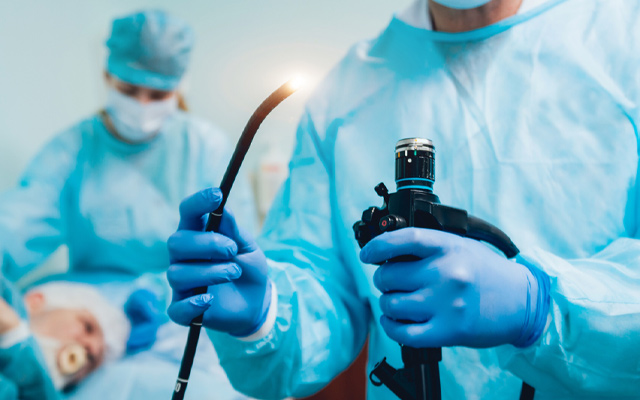
Living with thyroid, kidney, or blood pressure problems should not stand in the way of essential diagnostic care.
However, it does mean your preparation “checklist” looks a little different from the average patient’s. By aligning your chronic disease management with your procedural preparation, you can undergo your endoscopy with total peace of mind.
To help you feel confident and prepared, we have compiled the ultimate safety checklist for patients with complex medical histories.
What Is an Endoscopy and Why Is It Done?
Ever wondered how doctors examine the inside of your body without surgery?
Let’s explore what an endoscopy is and why it’s done.
An endoscopy is a procedure that allows healthcare providers to closely examine the internal structures of your body. During the procedure, a long, flexible tube called an endoscope is carefully inserted into your body, guiding it to the organ or area that needs to be examined.
Know why it is done:
- It is done to diagnose, monitor, and sometimes treat various conditions.
- Doctors use it to investigate symptoms such as unexplained pain, bleeding, or digestive troubles.
- It can also be used to take tissue samples (biopsies), remove abnormal growths, or even treat conditions such as blockages or inflammation.
Is Endoscopy Safe in Patients with High BP, Diabetes, Thyroid, and Kidney Disorders?
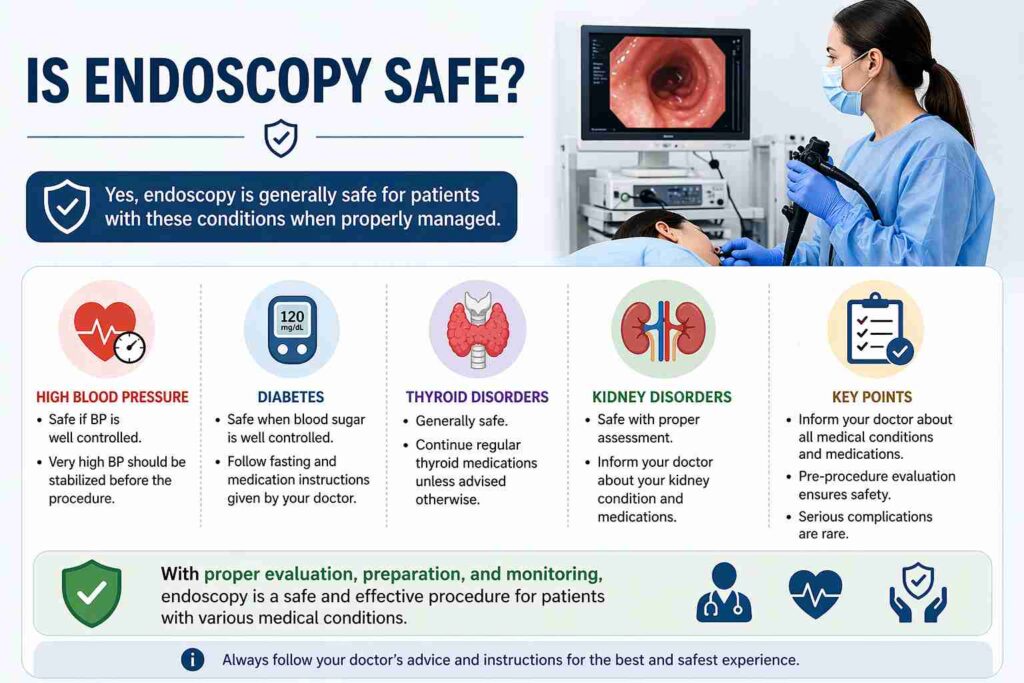
For patients with chronic medical conditions like hypertension, diabetes, thyroid disorders, and kidney disease, endoscopy preparation in Mukundapur involves extra considerations to ensure safety.
Why Most Patients with Chronic Medical Conditions Can Undergo Endoscopy Safely
While some patients may have concerns about undergoing endoscopy, most individuals with chronic conditions can safely have the procedure when adequate preparation is made. The key is proper management of these conditions before the procedure. For instance, blood pressure, blood sugar, and kidney function need to be controlled.
How Sedation and Fasting Change the Safety Plan
Sedation is commonly used during an endoscopy, but if you have chronic conditions, your sedation and fasting protocols may differ. For example, diabetic patients may need extra consideration when fasting to avoid hypoglycemia.
Endoscopy Safety in Patients with High Blood Pressure
For patients with high blood pressure, extra precautions are essential due to the potential risks associated with sedation and anaesthesia. Let’s examine how to safely perform endoscopy in patients with high BP.
Can You Undergo Endoscopy If You Have Hypertension?
Yes, patients with high blood pressure can safely undergo endoscopy. However, it’s crucial that their BP is well-controlled before and during the procedure. Uncontrolled hypertension can lead to complications, particularly during sedation and anaesthesia, as it can increase the risk of cardiovascular events such as a heart attack or stroke.
To ensure safe endoscopy for patients with high BP in Mukundapur, Long Life Speciality Clinic focuses on stabilising blood pressure before the procedure.
Blood Pressure Monitoring Before, During, and After Endoscopy
Continuous blood pressure monitoring before and during endoscopy is essential, especially for patients with high blood pressure. The procedure involves monitoring BP:
- Before Sedation: A baseline BP reading is taken to assess cardiovascular status and ensure it’s within safe limits for sedation.
- During the Procedure: BP is monitored regularly to detect fluctuations due to sedation and maintain stability.
- After the Procedure: BP is checked in the recovery room to ensure cardiovascular stability as sedation wears off.
By closely monitoring BP before, during, and after endoscopy in Mukundapur, doctors at Long Life Speciality Clinic can manage cardiovascular stability and intervene promptly if needed.
Endoscopy Safety in Patients with Diabetes
Fasting and managing blood sugar levels require special attention for diabetic patients before an endoscopy.
Let’s take a closer look at the unique considerations for patients with diabetes.
Why Fasting and Diabetes Need Extra Planning
- Fasting affects blood sugar levels, so personalised plans are required.
- Prevent hypoglycemia with specific fasting instructions.
- Insulin adjustments may be needed based on procedure timing.
Special Considerations for Colonoscopy Bowel Prep in Diabetes
- Careful fluid management during bowel prep is essential.
- Hydration is key to preventing dehydration.
- Special instructions ensure diabetic and prep needs are balanced.
Endoscopy Safety in Patients with Thyroid Disorders
Thyroid imbalances can affect how your body reacts to sedation and anaesthesia.
Here’s what you need to know about safely undergoing endoscopy with thyroid disorder in Mukundapur.
Can Patients with Hypothyroidism Undergo Endoscopy?
- Thyroid levels must be stabilised before the procedure.
- Unstable levels can affect metabolism and sedatives.
Should Thyroid Medicines Be Taken on the Morning of the Procedure?
- Take thyroid meds as usual unless otherwise instructed.
- Confirm with your healthcare provider for specific guidance.
When Thyroid Disease Needs Stabilisation First
- Severe imbalances require stabilisation before endoscopy.
- Adjust thyroid medications to ensure safety.
Endoscopy Safety in Patients with Kidney Disorders
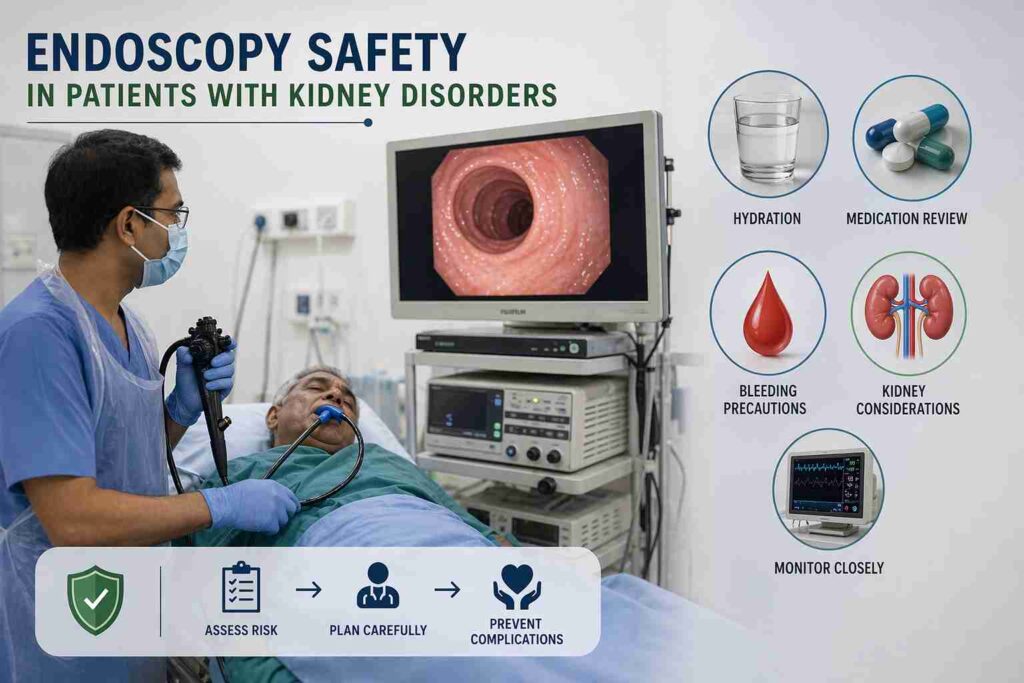
Kidney function plays a significant role in the safe administration of sedation during endoscopy.
Let’s explore why kidney health matters and how to prepare for an endoscopy if you have kidney disease.
Why Kidney Function Matters Before Endoscopy
- Kidney function is crucial for processing sedation drugs.
- Poor kidney function can increase the risk of complications.
- Kidney tests, such as creatinine and eGFR, assess readiness.
When Creatinine, eGFR, or Nephrology Input May Be Needed
- Nephrology consultation may be necessary for kidney issues.
- Medication and sedation adjustments ensure safe drug elimination.
Medicines That Need Special Attention Before Endoscopy
Here is a table listing medications that require special attention before getting an endoscopy.
| Medication Type | Considerations |
| Blood Pressure Medications | Review dosage and timing before the procedure |
| Diabetes Medications | Adjust insulin or oral meds to control sugar levels |
| Thyroid Medications | Take as directed, or follow the doctor’s instructions |
| Blood Thinners | Temporarily stop, as per your doctor’s advice |
What Tests or Checks May Be Needed Before Endoscopy?
- Blood Pressure and Blood Sugar Check
- Kidney Function Tests in Selected Patients
- ECG or Physician Clearance in High-Risk Patients
- Pre-Anaesthesia or Sedation Assessment
What Should Be Noted Before the Procedure
Certain symptoms may indicate that your endoscopy should be postponed for safety reasons:
- Very High Blood Pressure
- Frequent Hypoglycemia or Poor Sugar Control
- Breathlessness, Chest Pain, or Swelling
- Reduced Urine Output or Worsening Kidney Function
What Happens on the Day of Endoscopy?
On the day of the procedure, you will undergo several steps:
- Admission, Consent, and Monitoring: You’ll be admitted, and your doctor will review your consent and monitor your vitals.
- IV Line, Sedation, and Procedure Steps: An IV line will be inserted, and sedation will be administered if necessary. Your doctor will perform the endoscopy as planned.
- Recovery Room Observation: After the procedure, you’ll be observed in a recovery room until it’s safe for you to go home.
What to Expect After Endoscopy
After your endoscopy, it’s important to follow your healthcare provider’s instructions for recovery. Here’s what you can expect once the procedure is complete.
When You Can Eat, Drink, and Restart Medicines
Once you are fully awake and your vital signs are stable, you can usually eat and drink again. Your doctor will give you specific instructions on when to restart your medications.
Temporary Symptoms Like Bloating or Sore Throat
Some patients may experience mild bloating or a sore throat, especially after procedures like colonoscopy or upper GI endoscopy.
Warning Signs After the Procedure
If you experience severe abdominal pain, fever, or excessive bleeding, contact your healthcare provider immediately.
What Happens After Your Endoscopy: A Quick Guide
After an endoscopy, once you’re fully awake and stable, your doctor will guide you on when to resume eating, drinking, and restarting your medications. Mild, temporary symptoms such as bloating or a sore throat may occur, especially after procedures such as colonoscopy or upper GI endoscopy. It’s also essential to watch for warning signs such as severe abdominal pain, fever, or bleeding, which require immediate attention.
If you’re looking for expert care and guidance for getting an endoscopy in Mukundapur, visit Long Life Speciality Clinic today.
People Also Ask
Can a diabetic patient safely undergo endoscopy?
Yes, diabetic patients can safely undergo endoscopy, but their blood sugar levels need to be well-controlled. It’s important to adjust medications as advised by the doctor to prevent complications.
Should I take BP medicine before an endoscopy?
You should continue your blood pressure medication as prescribed, unless instructed otherwise by your doctor. They may adjust dosages based on sedation and the procedure.
Can I take thyroid medicine on the morning of endoscopy?
It is generally safe to take your thyroid medication on the morning of the procedure with a small sip of water, but always confirm with your doctor, as it depends on the timing of sedation and fasting instructions.
Is bowel prep safe in kidney disease?
Bowel preparation for endoscopy can be safe for patients with kidney disease, but adjustments may be necessary to avoid dehydration. Your doctor will guide you on the best approach based on your condition.
Can an endoscopy be done if my blood sugar is high?
Endoscopy may be delayed if blood sugar is poorly controlled, as high levels increase the risk of complications during sedation and recovery. Ensure blood sugar is stabilised before the procedure.