

Yes, GI problems can cause unexplained weight loss. Digestive disease is one of the most common medical reasons people lose weight without trying. In one review of studies, non-cancer digestive disease explained roughly 9% to 45% of unintentional weight loss cases.
If weight loss comes with belly pain, diarrhea, constipation or bloating, your gut may be the cause. This guide explains which conditions to suspect, which warning signs matter and which tests find the answer.
Quick answer
- Yes. Crohn’s disease, ulcerative colitis, celiac disease, ulcers, pancreatitis and GI cancers can all cause weight loss.
- See a doctor if you lose more than 5% of your body weight in 6–12 months without trying.
- Diagnosis usually needs blood tests, stool tests, an ultrasound or an endoscopy.
- Many causes are treatable, especially when found early.
How Much Weight Loss Is a Cause for Concern?
Mayo Clinic advises seeing a doctor if you lose more than 5% of your weight in 6 to 12 months without trying. For a person weighing 70 kg, that is about 3.5 kg.
In older adults or people with long-term illness, even a smaller loss can be an important warning sign.
Your weight loss is likely “unexplained” if:
- You are not dieting or taking weight-loss medicine.
- You have not started heavy exercise.
- Your clothes feel loose and your appetite has dropped.
- Family or friends have noticed the change.
How Do Digestive Problems Cause Weight Loss?
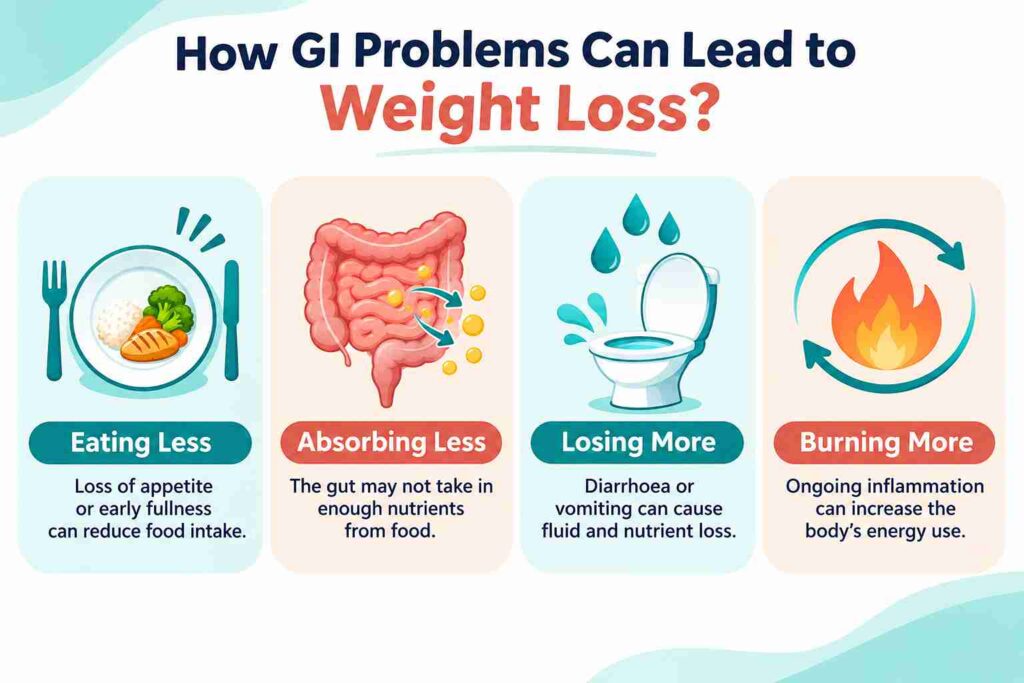
The gut digests food and absorbs nutrients. When it is inflamed, blocked or damaged, weight can fall in four ways.
- You eat less. Pain, nausea, early fullness or loss of appetite reduce your intake.
- You absorb less. A damaged gut lining cannot take in nutrients (malabsorption).
- You lose more. Diarrhea, vomiting or bleeding drain calories and fluids.
- You burn more. Ongoing inflammation raises the body’s energy needs.
Which GI Problems Cause Unexplained Weight Loss?
Here are the most common gut conditions, explained simply.
Crohn’s Disease
Crohn’s disease is a type of inflammatory bowel disease (IBD). It inflames the lining of the digestive tract. Common signs are severe diarrhea, abdominal pain and fatigue. The inflamed intestine cannot absorb nutrients well, and appetite often drops. Together, these cause rapid weight loss.
Ulcerative Colitis
Ulcerative colitis is another IBD. It inflames the colon and rectum. Look for bloody diarrhea, cramps and urgent bowel movements. Fluid loss and poor appetite lead to gradual weight loss.
Celiac Disease
Celiac disease is an autoimmune reaction to gluten in wheat, rye and barley. It damages the small intestine lining and blocks nutrient absorption. Bloating, diarrhea, anemia and weight loss are common. Do not start a gluten-free diet before testing, as it can hide the diagnosis.
Peptic Ulcers
Peptic ulcers are sores in the stomach lining, small intestine or food pipe. The usual causes are H. pylori infection and long-term painkiller use. Pain and appetite loss make people eat less. A blocked food passage can cause repeated vomiting, which adds to weight loss.
Chronic Pancreatitis
A long-inflamed pancreas cannot release enough digestive enzymes. Fat then passes undigested. Watch for oily, foul-smelling stools and upper belly pain that spreads to the back.
Digestive Tract Cancers
Cancers of the food pipe, stomach, pancreas or colon can cause weight loss, sometimes early. In reviewed studies, GI cancer was the most common cancer behind unintentional weight loss. Most weight loss is not cancer, but it must be ruled out.
Long-Lasting Gut Infections
Infections such as parasites and intestinal TB can cause diarrhea, fever and weight loss. Diarrhea that lasts a long time and parasite infections are known causes of appetite and weight loss.
Can Diabetes or an Overactive Thyroid Cause Weight Loss Too?
Yes. These are hormone (endocrine) conditions, not GI diseases. Diabetes and hyperthyroidism are both listed among common causes of unexplained weight loss. They can look like gut problems, so doctors rule them out. An endocrinologist can help.
Diabetes
With too little insulin, the body cannot use sugar well. Frequent urination drains fluids and electrolytes. The body also burns fat and muscle for energy. Both lead to weight loss.
Hyperthyroidism
An overactive thyroid makes too much thyroxine. This speeds up metabolism, so you burn more calories. Left untreated, it can cause serious health complications.
Which Symptoms Point to a Gut Cause?
| Condition | Symptoms that come with weight loss | Usual first tests |
|---|---|---|
| Crohn’s disease / ulcerative colitis | Diarrhea (maybe bloody), cramps, fatigue | Colonoscopy, stool and blood tests |
| Celiac disease | Bloating, diarrhea, anemia | Celiac blood test, endoscopy biopsy |
| Peptic ulcer | Burning pain, nausea, vomiting | Endoscopy, H. pylori test |
| Chronic pancreatitis | Oily stools, pain spreading to back | Ultrasound, blood and stool tests |
| GI cancer | Blood in stool, trouble swallowing, anemia | Endoscopy, colonoscopy, imaging |
| Gut infection | Diarrhea, fever | Stool and blood tests |
Warning Signs: When Should You See a Gastroenterologist?
Book a visit soon if weight loss comes with any of these:
- Blood in stool, or black, tar-like stool
- Pain or trouble swallowing
- Vomiting that does not stop
- Belly pain lasting more than two weeks
- Diarrhea lasting more than four weeks
- Pale skin, weakness or low hemoglobin
- Fever or night sweats
- Family history of colon cancer, IBD or celiac disease

Low iron or anemia with weight loss may also need a scope.
Read: Can Unexplained Anaemia or Low Iron Mean You Need an Endoscopy?
How Do Doctors Find the Cause of Weight Loss?
The doctor first asks about your weight pattern, diet, medicines and symptoms. Then comes a physical exam. Blood and urine tests usually come first, followed by imaging if needed.
| Test | What it checks |
|---|---|
| Blood and stool tests | Anemia, inflammation, thyroid, sugar, infection |
| Abdominal ultrasound (USG) | Liver, pancreas, gallbladder, bowel changes |
| Upper GI endoscopy | Ulcers, celiac changes, food pipe and stomach problems |
| Colonoscopy | Colitis, Crohn’s disease, polyps, colon cancer |
How Is GI-Related Weight Loss Treated?
Treatment depends on the cause. Never self-medicate or start a crash diet.
- IBD: anti-inflammatory or immune-calming medicines, plus nutrition support.
- Celiac disease: a strict, lifelong gluten-free diet.
- Peptic ulcer: acid-reducing medicines, plus antibiotics for H. pylori.
- Infections: targeted medicines for the germ found.
- Blockages or tumours: referral to a general surgeon or cancer specialist.
- All cases: a dietitian can help you regain weight safely.
Consult a Gastroenterologist
Losing weight without trying is a signal, not a diagnosis. Early tests give clear answers. At Long Life, you can meet our gastroenterology team and get testing close by.
Visit: 147, Barakhola, Krishak Pally Rd, Mukundapur, Kolkata 700099
Call: 8334073407 / 9874807480
FAQs: GI Problems and Weight Loss
Can IBS cause weight loss?
IBS usually does not cause major weight loss. If you are losing weight, look for another cause.
Is unexplained weight loss always cancer?
No. Cancer is one possible cause. Many causes are treatable, and in 6–28% of cases no cause is found after the first evaluation. Still, never ignore it.
Which doctor should I see for sudden weight loss?
See a gastroenterologist if you have gut symptoms. Otherwise, start with a general medicine physician.
Should I wait to see if my weight returns?
Don’t wait if you have lost over 5% or have red flags. Watchful waiting of 1 to 6 months is considered only after tests show no cause. Your doctor decides this.