
Did you know uterine fibroids (35%) and abnormal uterine bleeding (22%) are the leading causes for surgery?
While these conditions are often benign, they can cause significant discomfort and, in some cases, lead to more severe health complications. From heavy menstrual bleeding to pelvic pain and frequent urination, the symptoms of fibroids and cysts can greatly impact your daily life.
In this blog, we’ll explore the common signs and symptoms of fibroids and cysts and the treatment options available.
What Are Uterine Fibroids and Ovarian Cysts?
Uterine fibroids are non-cancerous growths in the uterus, while ovarian cysts are fluid-filled sacs that develop on the ovaries. Both can cause discomfort and may require medical attention.
Here is the detailed explanation:
Uterine Fibroids
Uterine fibroids are non-cancerous growths that develop in the wall of the uterus. They can vary in size from small, undetectable lumps to large masses that can distort the shape of the uterus. Fibroids often cause heavy menstrual bleeding, pelvic pain, and frequent urination due to pressure on the bladder. Depending on their size and location, fibroids can interfere with fertility and pregnancy, which is why timely treatment is essential.
Ovarian Cysts
On the other hand, ovarian cysts are fluid-filled sacs that develop on the ovaries. These cysts are generally benign, but they can sometimes cause complications, particularly if they rupture or become twisted. Common symptoms of ovarian cysts include abdominal bloating, pelvic pain, and painful intercourse. Large cysts or complex cysts may require surgical removal.
Do You Need a Gyno Surgeon?
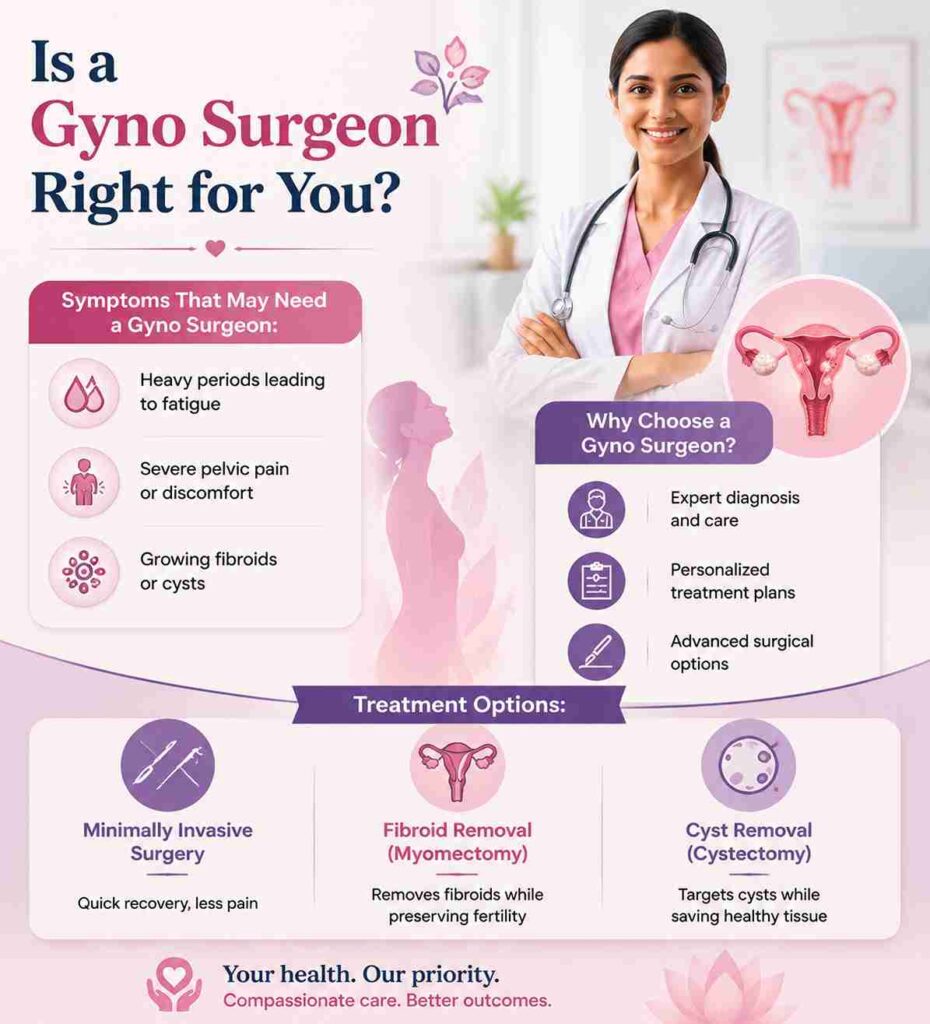
While many fibroids and cysts can be managed without surgery, there are clear signs when a gyno surgeon is necessary.
These are the signs you need to look at:
1. Severe or Persistent Pelvic Pain
- Constant Pelvic Pressure/Pain: A sharp or dull ache in the lower abdomen that doesn’t go away.
- Pain During Sex: Experiencing deep discomfort during or after intercourse.
- Painful Bowel Movements or Urination: This is especially common during menstruation and may indicate conditions such as endometriosis or endometriomas (chocolate cysts).
- Sudden, Intense Pain: A stabbing pain that may indicate a ruptured cyst or ovarian torsion, where the ovary twists on itself.
2. Abnormal Menstrual Bleeding
- Heavy, Prolonged Bleeding: Excessive bleeding during your period (menorrhagia) that leads to fatigue, weakness, or low iron levels.
- Spotting Between Periods: Unexplained bleeding outside of your regular cycle.
- Postmenopausal Bleeding: Any bleeding after menopause should be evaluated immediately by a doctor.
3. Bulk Symptoms and Abdominal Pressure
- Frequent Urination or Incontinence: Large fibroids or cysts can press on the bladder, causing frequent urination or difficulty in emptying the bladder.
- Constipation or Rectal Pressure: A growing pelvic mass can put pressure on the rectum.
- Abdominal Distension: A swollen abdomen that may resemble pregnancy, often caused by large fibroids or cysts.
4. Persistent or Large Growths
- Cysts Larger Than 5-10 cm: Ovarian cysts larger than 5-10 cm are unlikely to resolve on their own and may require surgical removal due to the risk of rupture or torsion.
- Complex Cysts: Cysts that appear on imaging with irregular borders, solid parts, or internal walls (septations) require further medical investigation.
- Rapidly Growing Fibroids: Fibroids that grow quickly should be evaluated to rule out any serious conditions.
5. Fertility and Reproductive Health Concerns
- Difficulty Conceiving: Submucosal fibroids, which grow inside the uterine cavity, can interfere with fertility and may need surgical removal.
- Frequent Miscarriages: If fibroids are affecting the shape of the uterus, they can cause pregnancy loss, requiring medical intervention.
6. Emergency Situations
- Severe Pelvic Pain with Fever or Vomiting: This could indicate an infection (like pelvic inflammatory disease) or a medical emergency such as ovarian torsion.
- Suspicion of Ectopic Pregnancy: Pain and bleeding during pregnancy require immediate medical attention, as ectopic pregnancies can be life-threatening.
At Long Life Speciality Clinic in Mukundapur, our expert team is ready to evaluate your condition and recommend the best course of action.
Treatment Options for Fibroids and Cysts
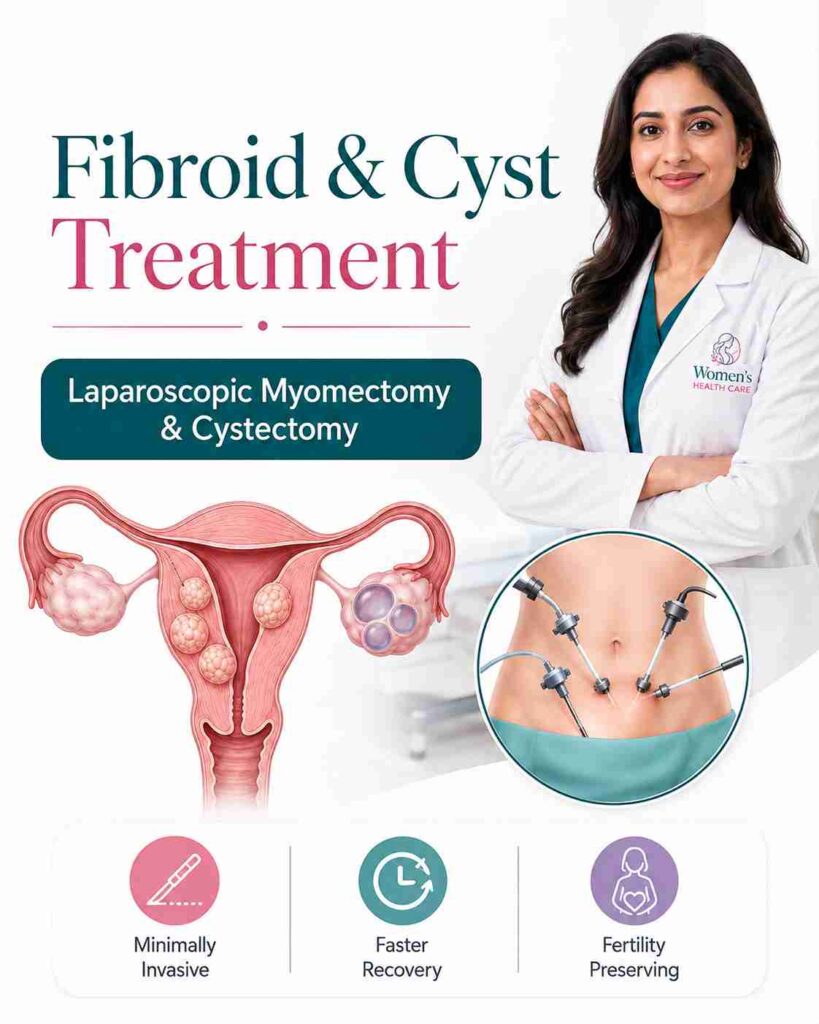
If you’re diagnosed with fibroids or ovarian cysts, the treatment options available will depend on the size, location, and symptoms of your condition.
Laparoscopic Myomectomy and Cystectomy
One of the most common surgical treatments for fibroids and ovarian cysts is laparoscopic myomectomy (for fibroids) and cystectomy (for ovarian cysts). These are minimally invasive surgeries that involve small incisions and the use of a camera to remove the fibroids or cysts. This approach offers numerous benefits:
- Faster recovery times compared to traditional open surgery.
- Minimal scarring and reduced risk of infection.
- Preservation of the uterus for women wishing to retain fertility.
These surgeries are typically performed by highly trained gyno surgeons, such as those at Long Life Specialty Clinic in Mukundapur.
Laparoscopic surgery offers the advantage of quick recovery and less postoperative pain, which is ideal for women leading busy lives.
Medications for Symptom Management
In some cases, medications may be prescribed to manage the symptoms of fibroids and cysts. These include:
- Hormonal Treatments: Birth control pills or hormone therapy can help shrink fibroids and regulate heavy menstrual bleeding.
- Pain Relievers: Non-steroidal anti-inflammatory drugs (NSAIDs) like ibuprofen can be used to alleviate discomfort and reduce pelvic pain.
- Progestin-Only IUD: This intrauterine device releases hormones that can help control heavy bleeding caused by fibroids and reduce related pain.
Managing Fibroids and Cysts: Don’t Wait, Act Early!
Fibroids and ovarian cysts are among the most common gynecological conditions women face, and if left unchecked, they can lead to significant discomfort and complications. However, with early diagnosis and timely intervention, these conditions are highly manageable.
From minimally invasive laparoscopic surgery to targeted medical treatments, there’s a solution to help you feel better and regain control of your health.
Quick Recap: Recognise and Act!
To put it simply, recognising the signs of fibroids or ovarian cysts early on, such as irregular bleeding, pelvic discomfort, or constant urination, can make all the difference. The right treatment, like laparoscopic surgery, can have you back to normal faster, with minimal recovery time.
Don’t wait—take control of your health now. Contact Long Life Speciality Clinic in Mukundapur today to schedule a consultation with a trusted gyno surgeons.
Call + 8334073407 / 9874807480
Frequently Asked Questions (FAQs)
1. How are uterine fibroids diagnosed?
Uterine fibroids are typically diagnosed through a pelvic exam, ultrasound, or MRI. Your gyno surgeon will recommend the most suitable test based on your symptoms.
2. Can ovarian cysts go away on their own?
Many small ovarian cysts resolve on their own without treatment. However, larger or persistent cysts may require medical intervention or surgery.
3. What are the risks of not treating fibroids?
Untreated fibroids can lead to complications such as anemia (from heavy bleeding), infertility, or even miscarriage, depending on their size and location.
4. How long is the recovery after laparoscopic surgery for fibroids?
Recovery from laparoscopic surgery is generally quicker than traditional surgery, with most patients returning to normal activities within 1-2 weeks, though complete healing may take a few months.
5. Are there non-surgical treatments for ovarian cysts?
Yes, some ovarian cysts can be managed with hormonal birth control, pain relievers, or watchful waiting. Surgery is typically recommended only for large, complex, or symptomatic cysts.