

Urine tests are one of the most common diagnostic procedures a doctor can order. A simple sample can reveal early signs of kidney disease, urinary tract infections (UTIs), diabetes, liver problems, and dehydration — often before you notice any symptoms. If your doctor has asked for a urinalysis, here’s exactly what it involves, how to prepare, and how to read your report.
What Is a Urine Test (Urinalysis)
A urine test, or urinalysis, examines a urine sample for substances like glucose, blood, bacteria, and protein. It’s used to detect and manage a wide range of disorders, checking the appearance, concentration and content of urine — for example, a urinary tract infection can make urine look cloudy instead of clear, and increased protein levels can signal kidney disease.
Conditions a Urine Test Can Help Detect
- Kidney disease
- Urinary tract infections (UTIs)
- Liver problems
- Diabetes
- Dehydration
- Pregnancy (via hCG)
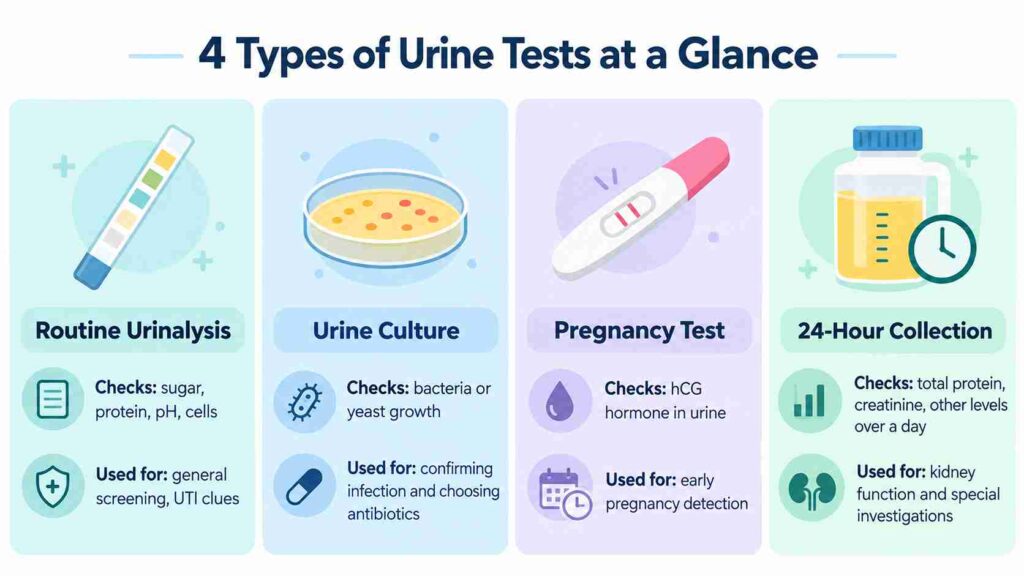
Types of Urine Tests
| Test Type | What It Checks | When It’s Ordered |
| Routine urinalysis | Protein, glucose, pH, appearance, blood | General checkups, pre-surgery, unexplained symptoms |
| Urine culture | Type of bacteria causing infection | Suspected UTI or recurrent infections |
| Pregnancy test (urine) | Presence of hCG hormone | Suspected pregnancy |
| 24-hour urine collection | Creatinine, protein over a full day | Monitoring kidney function, suspected kidney disease |
Do You Need to Fast Before a Urine Test?
If you’re having only a urinalysis, you can eat and drink normally beforehand. If you’re having other tests alongside it, you might need to fast — your doctor or the lab will give you specific instructions. It’s also worth telling your doctor about any medications, vitamins, or supplements you’re taking, since these can affect results.
How to Prepare for a Urine Test
- Stay hydrated — unless your doctor tells you otherwise
- Check medications and food — some can interfere with results; ask your doctor what to avoid
- Use a clean, sterile container — usually provided by the lab
- Collect a mid-stream, first-morning sample where possible, for the most accurate reading
Clean-Catch Collection: Step by Step
- Wash your hands thoroughly.
- Clean the genital area with the wipe provided, front to back.
- Start urinating into the toilet for a second or two.
- Position the container mid-stream and collect the sample.
- Finish urinating into the toilet.
- Seal the container and hand it to the lab promptly.
Urine Test vs. Urine Culture: What’s the Difference?
| On Points | Routine Urinalysis | Urine Culture |
|---|---|---|
| Purpose | Broad screening — checks physical/chemical properties | Identifies the specific bacteria causing an infection |
| Method | Dipstick + microscopic exam | Sample grown in a lab over 24–48 hours |
| Typical turnaround | Same day in most labs | 1–2 days, as bacteria need time to grow |
| Ordered when | General health check, routine screening | Suspected UTI, recurrent infections, before starting antibiotics |
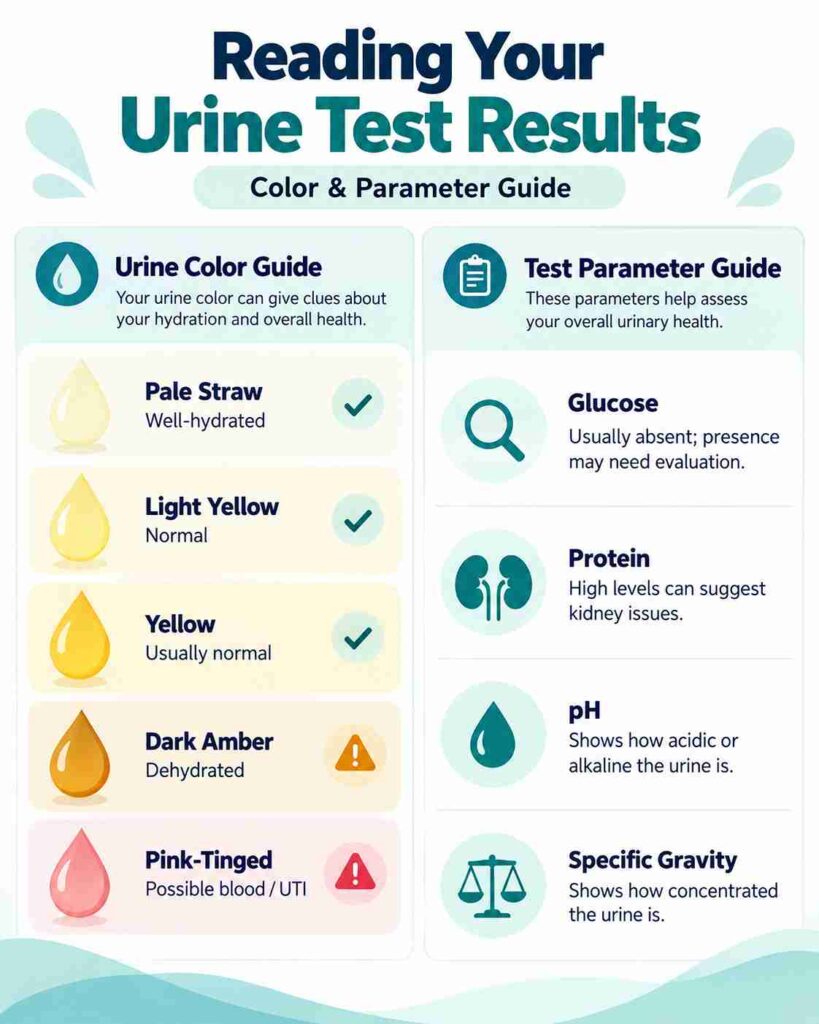
Understanding Urine Test Results
| Parameter | Normal Finding | What an Abnormal Result May Suggest |
| Colour | Pale to light yellow | Dark/amber: dehydration; Red/pink: possible blood |
| Specific gravity | Reflects normal kidney concentrating ability | Abnormal: possible kidney dysfunction |
| Glucose | Negative | Positive: possible diabetes/high blood sugar |
| Protein | Negative/trace | Present: possible kidney disease |
| pH | Roughly neutral range | Abnormal: possible infection or kidney stones |
Note: a urinalysis alone usually doesn’t provide a definite diagnosis — depending on the results, your doctor may recommend follow-up tests.
When Should You See a Doctor About Your Results?
- Persistent cloudy, dark, or blood-tinged urine
- Burning or pain during urination alongside abnormal results
- Repeated positive glucose or protein readings
- Any result your doctor flags as needing follow-up
How Common Are Urinary Issues That Urine Tests Catch?
UTIs are among the most common infections a urine test can catch — they’re the third most common infection in India and affect nearly half of women at least once in their lifetime. This is one reason doctors order a routine urinalysis even for mild or vague symptoms like fatigue or lower back discomfort.
FAQs About Urine Tests
Is a urine test painful?
No. It’s non-invasive — you simply collect a sample in a container.
Can I drink water before a urine test?
Yes, staying hydrated is generally recommended for a routine urinalysis unless your doctor tells you otherwise.
How long does it take to get urine test results?
This depends on the specific test — routine urinalysis is typically faster than a urine culture, which needs time for bacteria to grow.
Does a urine test show pregnancy?
Yes — a urine pregnancy test checks for the hCG hormone.
Can a urine test detect kidney problems early?
Yes, protein or abnormal specific gravity in urine can be an early indicator, which is why routine urinalysis is often part of preventive health checkups.