
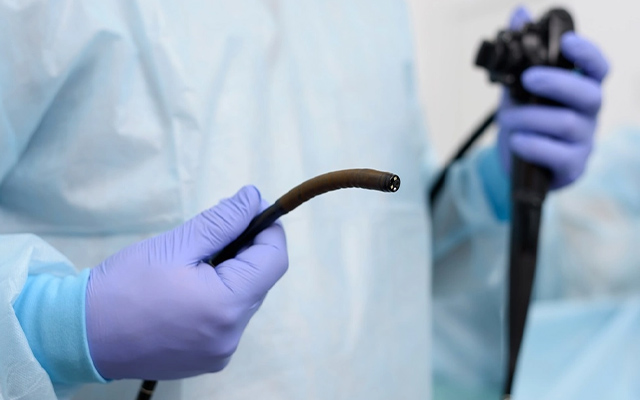
Digestive symptoms such as persistent acidity, abdominal discomfort, unexplained weight loss, difficulty swallowing or repeated indigestion may require a closer evaluation of the gastrointestinal tract. An Upper GI endoscopy helps doctors examine the oesophagus, stomach and duodenum using a small camera, while a biopsy provides additional information by analysing a tissue sample under a microscope.
Many patients feel anxious when they hear the word “biopsy” and immediately associate it with cancer. However, a biopsy is a routine diagnostic step used to identify several conditions, including infections, inflammation and structural changes.
Understanding the role of endoscopy and biopsy can help patients approach the procedure with greater clarity.
What Is the Difference Between an Endoscopy and a Biopsy?
What the doctor sees during an endoscopy
An endoscopy, also called gastroscopy when examining the upper digestive tract, allows a doctor to directly view the gastrointestinal lining. During the procedure, a flexible tube with a camera is passed through the mouth to examine the oesophagus, stomach and the first part of the small intestine.
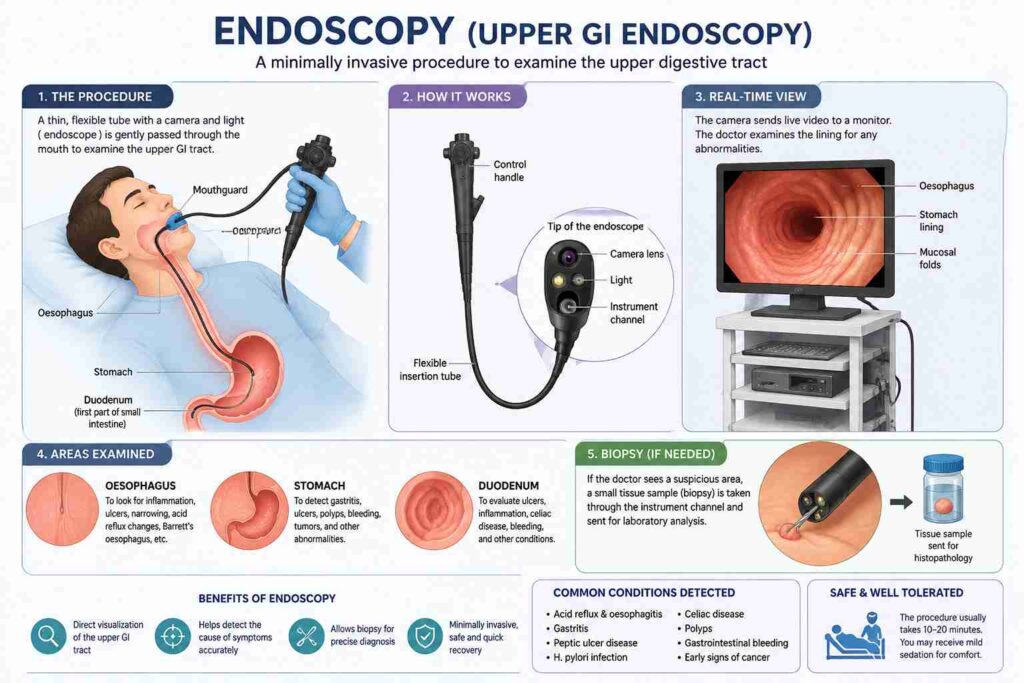
A doctor may identify visible changes such as:
- Inflammation or irritation of the lining
- Acid reflux-related damage
- Stomach or duodenal ulcers
- Bleeding areas
- Narrowing of the digestive passage
- Polyps or abnormal growths
An upper GI endoscopy procedure provides valuable visual information, but some conditions may exist at a microscopic level and cannot always be identified only through the camera.
What a biopsy can detect that the camera cannot
An endoscopic biopsy involves collecting a small tissue sample from the gastrointestinal lining for laboratory examination. The sample is examined through histopathology to identify cellular changes that may not be visible during the procedure.
A biopsy can help detect:
- H. pylori infection
- Chronic gastritis
- Coeliac disease-related changes
- Precancerous changes
- Dysplasia
- Certain gastrointestinal cancers
This is why an endoscopic biopsy provides additional diagnostic information beyond what doctors can see during an endoscopy.
What Diseases Can an Upper GI Endoscopy Detect?
An upper GI endoscopy procedure can help diagnose several conditions affecting the oesophagus, stomach and duodenum.
Acid reflux damage, oesophagitis and Barrett’s oesophagus
Long-term acid reflux can irritate the oesophagus and cause inflammation known as oesophagitis. In some patients, repeated acid exposure may lead to changes in the oesophageal lining called Barrett’s oesophagus.
During endoscopy, doctors may identify signs such as:
- Redness or inflammation
- Erosions in the oesophageal lining
- Abnormal tissue appearance
A Barrett’s oesophagus biopsy may be recommended to assess cellular changes and check for precancerous changes such as dysplasia.
Gastritis, stomach ulcers and duodenal ulcers
Gastritis refers to inflammation of the stomach lining and may occur due to factors such as H. pylori infection, certain medications or long-term irritation.
An endoscopy may detect:
- Swelling or irritation of the stomach lining
- Gastric ulcers
- Duodenal ulcers
- Areas of bleeding
Although the appearance of inflammation can suggest gastritis, a gastric biopsy may be required to confirm the cause and identify conditions like H. pylori infection.
Bleeding, narrowing, polyps and abnormal growths
Endoscopy can help investigate symptoms related to:
- Gastrointestinal bleeding
- Persistent vomiting
- Difficulty swallowing
- Unexplained anaemia
- Abnormal tissue growths
If a doctor notices a suspicious area, a tissue sample may be collected for further analysis.
What Conditions Can Be Confirmed Through an Endoscopic Biopsy?
An endoscopic biopsy at our centre can help doctors evaluate microscopic changes in digestive tissues and confirm conditions that may not be obvious during endoscopy.
H. pylori infection and chronic gastritis
H. pylori is a type of bacteria that can infect the stomach lining and contribute to chronic gastritis and peptic ulcer disease. A biopsy-based H. pylori biopsy test allows laboratory specialists to examine stomach tissue for signs of infection.
A biopsy may also reveal:
- Chronic inflammation
- Changes in stomach lining cells
- The extent of gastritis
Celiac disease and damage to the small intestine
Celiac disease affects how the small intestine responds to gluten. In some cases, doctors perform a duodenal biopsy during endoscopy to check for damage caused by the condition.
The biopsy may show features such as:
- Villous atrophy
- Changes in intestinal lining structure
- Inflammatory changes
This helps confirm whether symptoms are related to coeliac disease.
Precancerous changes, dysplasia and gastrointestinal cancer
A biopsy can identify changes at the cellular level, including:
- Intestinal metaplasia
- Dysplasia
- Abnormal cell growth
- Malignant cells
However, detecting these changes does not mean every biopsy indicates cancer. Many biopsy reports show benign tissue or non-cancerous conditions.
Does Taking a Biopsy During Endoscopy Mean Cancer Is Suspected?
No. Taking a biopsy during an endoscopy does not automatically mean that cancer is suspected.
Doctors commonly take biopsies as part of standard evaluation because many digestive conditions require microscopic confirmation. For example, a biopsy may be taken to confirm gastritis, check for H. pylori infection or evaluate inflammation.
A biopsy is a diagnostic tool that provides accurate information about tissue health. It helps doctors avoid assumptions based only on appearance.
Why doctors take biopsies even when the lining looks normal
The gastrointestinal lining can sometimes appear normal during an endoscopy while microscopic changes are present. Conditions such as mild inflammation, early cellular changes or coeliac disease may not create visible abnormalities.
In such cases, a biopsy helps identify problems that cannot be detected through visual examination alone.
When Is a Biopsy More Likely to Be Taken Because of a Suspicious Area?
Doctors may recommend a biopsy if the endoscopy shows changes that require further evaluation.
Endoscopy findings that may need closer examination
These may include:
- Unusual patches or changes in colour
- Raised or irregular tissue areas
- Persistent ulcers that do not heal
- Polyps
- Abnormal growths
- Areas suspected to have precancerous changes
Taking a biopsy allows specialists to determine whether the tissue is inflamed, benign or showing abnormal cellular changes.
Can an Endoscopy Be Normal but the Biopsy Show a Problem?
Yes. A normal-looking endoscopy does not always rule out disease.
Why microscopic disease may not be visible during the procedure
Some conditions affect cells rather than the overall appearance of the tissue. For example:
- Early inflammation
- H. pylori infection
- Coeliac disease changes
- Microscopic cellular abnormalities
This is why doctors may collect tissue samples even when the digestive lining appears healthy.
How Long Do Endoscopy Biopsy Results Take, and What Will the Report Show?
The time required for biopsy results depends on the laboratory process and the type of testing needed. In many cases, histopathology reports are available within a few days, although complex evaluations may require additional time.
A biopsy report may mention:
- Normal tissue findings
- Benign changes
- Inflammation
- Infection
- Precancerous changes
- Dysplasia
- Presence or absence of malignant cells
Understanding these terms with the help of a doctor is important because medical reports need to be interpreted in the context of symptoms and endoscopy findings.
Patients requiring accurate interpretation of reports can consult a gastroenterologist for proper guidance and follow-up planning.
What Symptoms May Lead a Doctor to Recommend Endoscopy and Biopsy?
Doctors may suggest endoscopy and biopsy when symptoms persist or require further investigation.
Digestive warning signs that should be properly investigated
These may include:
- Long-lasting acidity or heartburn
- Difficulty swallowing
- Recurrent stomach pain
- Persistent nausea or vomiting
- Unexplained weight loss
- Blood in vomit or stool
- Ongoing indigestion
- Reduced appetite
Early evaluation can help identify the cause and guide appropriate treatment.
What Questions Should You Ask After an Endoscopic Biopsy?
After receiving biopsy advice or reports, patients may ask:
- Why was the biopsy taken?
- Which area was sampled?
- Does the report show inflammation or infection?
- Are there any precancerous changes?
- Is further testing required?
- What treatment or follow-up is recommended?
Clear communication with your healthcare provider helps you understand the findings and next steps.
A Biopsy Is a Diagnostic Step, Not a Cancer Diagnosis
A biopsy during endoscopy is a common medical procedure used to understand changes inside the digestive tract. It helps diagnose infections, inflammation, ulcers, coeliac disease, precancerous changes and other gastrointestinal conditions.
For reliable pathology and lab testing services, patients should choose centres that follow proper diagnostic standards and provide accurate reporting.
If you are looking for one of the best ultrasound scan centres in Mukundapur, our clinic offers comprehensive investigation facilities and specialist guidance.
Book a consultation today.
People Also Ask
Does every endoscopy require a biopsy?
No. A biopsy is not required in every endoscopy. Doctors decide based on symptoms, endoscopy findings and the need for microscopic evaluation.
Does an abnormal biopsy always mean cancer?
No. An abnormal biopsy may indicate inflammation, infection, precancerous changes or other non-cancerous conditions. Further interpretation is required based on the report.
Why is a biopsy taken during endoscopy?
A biopsy is taken to examine tissue cells under a microscope and identify conditions that cannot be confirmed through visual examination alone.
Can stomach biopsy results detect H. pylori infection?
Yes. A gastric biopsy can help detect H. pylori infection and assess related stomach inflammation.
How accurate is an endoscopy biopsy?
An endoscopic biopsy is considered a reliable diagnostic method because it examines actual tissue changes rather than only visible symptoms.
Can you have cancer with a normal endoscopy?
In some cases, microscopic abnormalities may not be visible during endoscopy. This is why biopsies are sometimes taken even when the lining appears normal.