
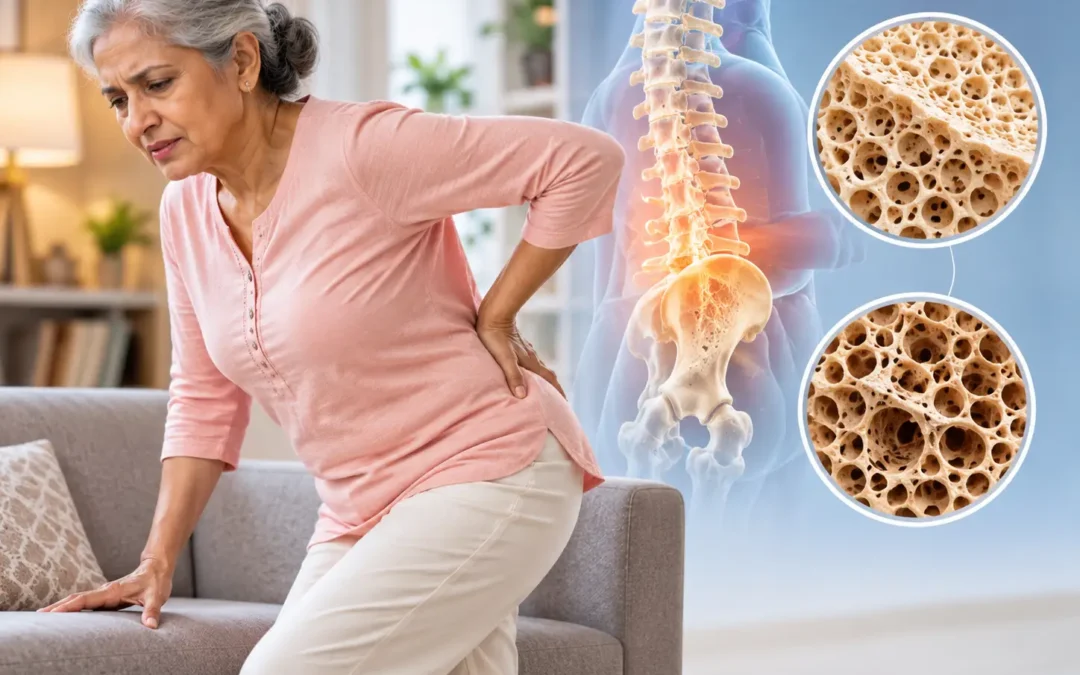
Osteoporosis often develops without noticeable symptoms, but warning signs may include back pain, loss of height, a stooped posture, and fractures after minor falls.
It is known as a silent disease because many people discover they have it only after a fracture. Women after menopause and adults aged 65 and older may need a bone density test, depending on their risk factors.
Recognising these signs and assessing your risk early can help identify the condition before a serious fracture occurs.
What Is Osteoporosis?
A condition in which bones lose density and strength, making them fragile and more likely to break. Healthy bones contain tiny spaces resembling a honeycomb. These spaces become larger, weakening the bone’s internal structure.
Before reaching this stage, many people develop osteopenia, an earlier stage of low bone density that is not yet osteoporosis. It serves as a warning sign that bones are weakening.
Without appropriate management, bone density may continue to decline, increasing the risk of fractures during everyday activities.
What Are the Early Signs of Osteoporosis?
Early indicators are usually silent.
However, warning signs may appear as your skeleton loses strength. Although you cannot feel your bones thinning, certain symptoms may indicate bone loss.
Recognising these initial signs can help you identify the condition before a serious fracture occurs.
Watch out for these common warning signs and symptoms:
- Back pain: May result from small, sometimes unnoticed fractures in the spine.
- Loss of height: Gradual height loss as the spinal bones compress.
- Stooped posture: A forward curve or hunch in the upper back.
- Easy fractures: Breaking a bone after a minor fall or bump.
- Brittle nails: Fingernails that crack, split, or break easily.
- Weak grip strength: A noticeable decline in hand and forearm strength.
- Receding gums: Jawbone changes may contribute to gum recession.
Many of these signs can have other causes. A bone density test can help confirm it!
What Causes Osteoporosis, and Who Is at Risk?
Bone loss speeds up with age, low hormone levels—especially after menopause—and low calcium or vitamin D levels. These causes can weaken bones over time.
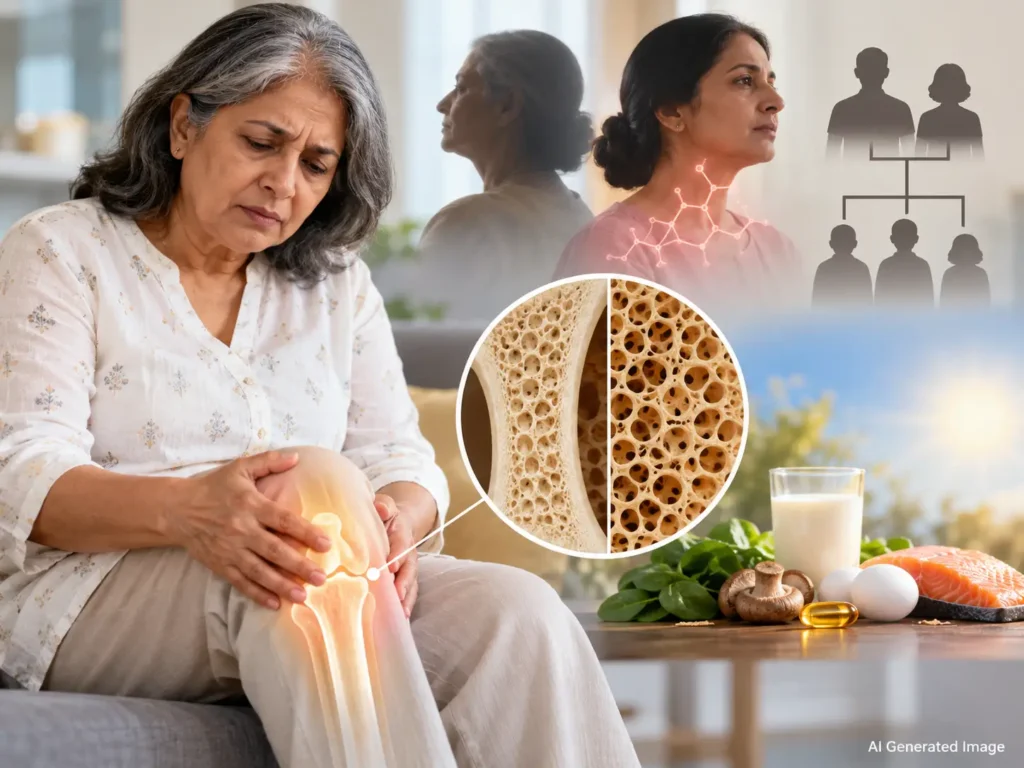
Several risk factors increase the likelihood of developing osteoporosis:
- Age over 50: Bone loss becomes more common with age.
- Menopause: Declining estrogen levels accelerate bone loss.
- Family history: A parent with the condition increases your risk.
- Vitamin D deficiency: Low levels can reduce calcium absorption.
- Smoking: Tobacco use can weaken bones.
- Long-term steroid use: Certain medications can reduce bone density.
- Sedentary lifestyle: Limited weight-bearing activity can contribute to bone loss.
- Low body weight: Being underweight can increase fracture risk.
- Thyroid problems: Certain thyroid conditions can contribute to bone loss.
Osteoporosis is more common in women than men, particularly after menopause, when declining estrogen levels accelerate bone loss. [Source].
Who Needs a Bone Density Test?
Doctors commonly recommend a bone density test for women aged 65 and older, postmenopausal women with risk factors, men aged 70 and older, and anyone who has experienced a fracture after a minor fall. This test measures bone density and helps identify osteoporosis and assess fracture risk.
A medical professional may recommend a bone density test if you belong to any of these groups:
- Women over 65: Bone loss and fracture risk increase with age.
- Men over 70: Bone density can decline gradually with ageing.
- Postmenopausal women under 65: Those with additional risk factors, such as smoking or a family history of having the condition.
- Adults with previous fractures: Anyone who experiences a fracture after a minor fall, particularly after age 50.
- People taking certain medications: Those using steroids long-term or taking specific breast or prostate cancer treatments that affect bone health.
Note that these are general guidelines. Your doctor will determine the appropriate timing and need for screening based on your medical history and individual risk factors
What Is a DEXA Scan, and How Is It Done?
A DEXA scan is a quick, comfortable, low-radiation X-ray that measures bone density, usually at the hip and spine. It is the standard test for diagnosing osteoporosis and identifying low bone density.
During the test, you lie flat on a padded table while a scanning arm moves over your body. The procedure typically takes 10–15 minutes, requires no injections, and usually lets you remain fully clothed, as long as your clothing has no metal components in the scanned area.
Your results include a T-score, which compares your bone density with that of a healthy young adult.
| T-Score Range | Indication |
| −1.0 and above | Normal bone density |
| Below −1.0 but above −2.5 | Osteopenia (low bone density) |
| −2.5 and below | Osteoporosis (low bone density) |
Which Other Tests Help Check Bone Health?
Blood tests for vitamin D, calcium, and thyroid function can help identify underlying causes of bone loss, while X-rays can reveal existing fractures but cannot reliably detect early bone thinning. These additional tests help your doctor assess your overall bone and metabolic health.
- Calcium and vitamin D tests: Measure nutrients essential for maintaining bone strength.
- Thyroid panel: Checks thyroid function, as an overactive thyroid can accelerate bone loss.
- Standard X-ray: Helps identify fractures, including spinal fractures, but may not detect osteoporosis until significant bone loss has occurred.
How Can You Keep Your Bones Strong?
A calcium-rich diet, adequate vitamin D, weight-bearing exercise and avoiding smoking can help maintain bone strength and slow bone loss. Incorporating these habits into your daily routine supports skeletal health as you age.
- Dietary choices: Eat calcium-rich foods such as dairy products, ragi, green leafy vegetables, nuts and fish.
- Sunlight exposure: Get regular, safe sunlight exposure to support vitamin D production.
- Physical activity: Walk regularly and include suitable strength-training exercises.
- Tobacco cessation: Avoid smoking, which can weaken bones.
- Alcohol moderation: Limit alcohol consumption to help protect bone health.
- Fall prevention: Remove household hazards and improve lighting to reduce fall risk, especially in older adults.
A healthy diet and regular exercise support bone strength but may not be enough to treat osteoporosis. Follow your doctor’s advice on medication, supplements and other treatments if you have significant bone loss.
When Should You See Orthopaedic Doctors?
If or when you experience unexplained back pain, a fracture after a minor fall, loss of height, or risk factors such as menopause or a family history of the condition. Consulting a specialist early can help you manage bone thinning effectively.
Here’s When to Seek Specialist Advice
- Minor-impact fractures: Sustaining a fracture after a simple slip, stumble, or minor bump.
- Physical changes: Developing unexplained back pain or gradually losing height.
- Age-related risks: Reaching age 65 or going through menopause, particularly with additional risk factors.
- Family history: Having a parent with a hip fracture or a previous history of the condition.
Final Takeaway!
Osteoporosis is a silent condition, so it is vital to know your risk factors and get tested on time.
Our experienced orthopaedics doctors at the Mukundapur clinic help patients spot early warning signs and protect their future mobility.
Don’t wait for a fracture—keep your bones strong.
FAQs
What are the first signs of osteoporosis?
Early bone loss usually has no symptoms, but warning signs include back pain, gradual height loss, a stooped posture, weak grip strength, and fractures after minor impacts.
At what age should a woman get a bone density test?
Routine screening is recommended for women aged 65 and older. However, medical guidelines recommend starting earlier—at age 50 or around menopause—if you have specific risk factors for bone loss
Can osteoporosis be reversed?
No, it cannot always be fully reversed, but medical treatments, a balanced diet, and exercise can help slow bone loss and improve bone density.
Is a DEXA scan painful or harmful?
No, the scan is non-invasive and uses a low dose of radiation to measure bone density. Your doctor can explain any precautions needed before the test.
Does vitamin D deficiency cause osteoporosis?
Vitamin D deficiency can contribute to bone loss by reducing calcium absorption. Severe or prolonged deficiency can weaken bones and increase fracture risk.
Medical Disclaimer:
This content is for informational purposes only and does not replace professional medical advice, diagnosis, or treatment. Consult a qualified healthcare professional for personalised guidance on fractures, bone density testing, and treatment options.