
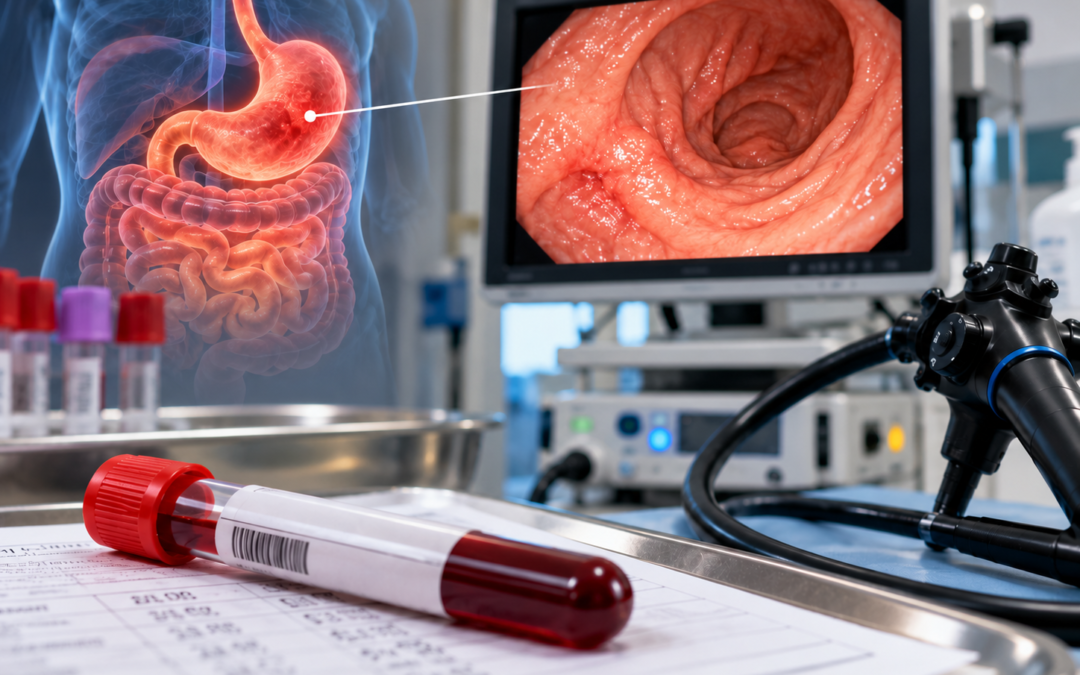
Low iron or anaemia doesn’t automatically mean you need an endoscopy, but persistent or unexplained results may require investigation to find an underlying cause. Iron deficiency can develop from blood loss, reduced absorption or other conditions affecting the digestive tract. Doctors usually begin with blood tests and a clinical assessment.
If the cause remains unclear, gastrointestinal evaluation may help identify bleeding, inflammation or conditions affecting iron absorption.
What Is Iron Deficiency Anaemia, and Why Does It Need Investigation?
A common blood disorder where low iron levels stop the body from making enough haemoglobin.
Why Does It Need Investigation?
- Find hidden blood loss: Identify bleeding from ulcers, polyps, or gastrointestinal cancer.
- Identify absorption problems: Detect conditions such as coeliac disease that affect nutrient absorption.
- Guide treatment: Treating low iron alone may not address the underlying cause.
- Prevent complications: Untreated anaemia can affect the heart, pregnancy, and childhood growth.
Common Symptoms of Low Iron and Anaemia
- Fatigue and weakness: Persistent tiredness, low energy, or physical weakness.
- Breathing and heart symptoms: Breathlessness and rapid heartbeat, particularly during activity.
- Neurological symptoms: Dizziness, headaches, and difficulty concentrating.
- Physical changes: Pale skin, cold hands and feet, and brittle nails.
- Other symptoms: Unusual cravings for ice or non-food items (pica), hair loss, or tinnitus.
When Anaemia Is Called “Unexplained”
Anaemia is considered “unexplained” when routine investigations do not identify an underlying cause after assessing common factors such as iron, vitamin B12, or folate deficiency, bleeding, kidney disease, and chronic inflammation.
How Are Low Haemoglobin and Iron Levels Actually Diagnosed?
Blood tests are the starting point for confirming anaemia and determining whether iron deficiency is present. The results can also help doctors decide whether further investigation is needed.

- CBC test: Measures haemoglobin and provides information about red blood cells.
- Ferritin blood test: Helps assess the body’s stored iron.
- Clinical assessment: Doctors consider symptoms and medical history alongside test results.
- Further evaluation: Persistent or unexplained findings may require additional investigation.
What a CBC Test Shows
It provides information about haemoglobin and red blood cells, helping doctors identify anaemia and understand its pattern.
- Haemoglobin: Shows whether the blood has a lower-than-expected oxygen-carrying capacity.
- Red blood cells: Their size and other characteristics can provide clues about the type of anaemia.
- Overall interpretation: Assess results alongside iron studies and clinical history.
- Limitations: A CBC can identify anaemia but does not by itself establish its underlying cause.
Ferritin Blood Test — Confirming True Iron Deficiency
Ferritin helps assess the body’s stored iron and is an important part of evaluating suspected iron deficiency.
- Low ferritin: Usually indicates depleted iron stores.
- Iron stores: The result shows the amount of stored iron available to the body.
- Inflammation: Ferritin can rise with inflammation, so the result may need careful interpretation.
- Additional testing: Other iron studies may be considered when the findings are not straightforward.
Why Would a Gastroenterologist Recommend an Endoscopy for Anaemia?
When a digestive-tract cause is suspected, particularly when iron deficiency remains unexplained or hidden blood loss needs investigation.
- Hidden bleeding: Small amounts of gastrointestinal blood loss may occur without obvious visible bleeding.
- Stomach conditions: Ulcers, gastritis and erosions can contribute to blood loss.
- Absorption problems: Some digestive conditions can interfere with the body’s ability to absorb iron.
- Direct examination: Endoscopy lets doctors examine the digestive tract for abnormalities that blood tests can’t detect.
Occult (Hidden) GI Bleeding as a Cause
- Slow blood loss: Occult bleeding may occur gradually without visible blood in the stool.
- Iron depletion: Continued blood loss can gradually reduce the body’s iron stores.
- Finding the source: Endoscopy can help identify bleeding from the upper GI tract.
Stomach Ulcer Bleeding, Gastritis, and Erosions
These conditions can cause bleeding from the stomach lining and may contribute to iron deficiency when blood loss is persistent or recurrent.
- Ulcers: Breaks in the stomach lining can bleed.
- Gastritis: Inflammation of the stomach lining may sometimes be associated with bleeding.
- Erosions: Surface damage can also result in blood loss.
- Identifying the underlying condition can help guide appropriate treatment.
Celiac Disease and Poor Iron Absorption
Celiac disease can interfere with iron absorption by damaging the small intestine, making it a possible contributor to unexplained iron deficiency.
- Villi damage: Celiac disease can damage the small-intestinal lining.
- Malabsorption: This may interfere with iron absorption.
- Biopsy: During endoscopy, doctors can sample small-intestinal tissue when celiac disease is suspected.
Upper GI Endoscopy vs. Colonoscopy — Why Doctors Often Recommend Both
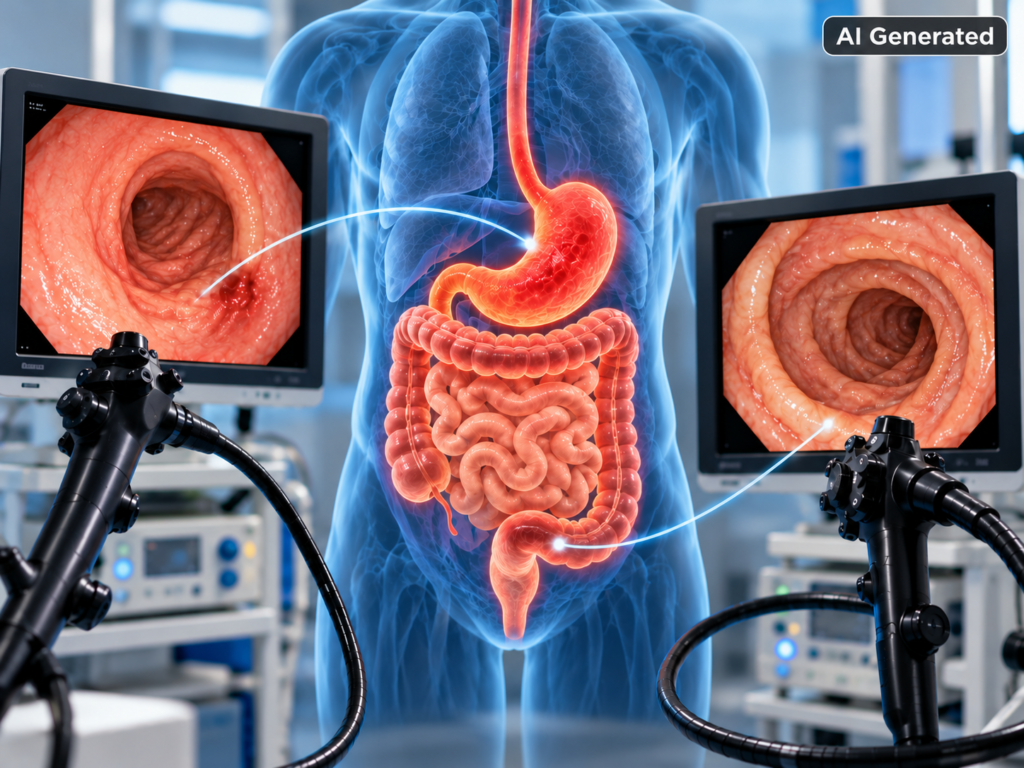
Both procedures examine different sections of the digestive tract, so using them together can provide a more complete search for a possible source of blood loss or another underlying problem.
- Upper GI endoscopy: Examines the oesophagus, stomach and the first part of the small intestine.
- Colonoscopy: Examines the large intestine and usually the end of the small intestine.
- Different causes: Problems responsible for blood loss or other abnormalities may occur in either the upper or lower digestive tract.
- Combined assessment: Examining both areas can reduce the chance of overlooking a potential source when a bidirectional evaluation is appropriate.
What Upper GI Endoscopy Looks For
An upper examination allows the doctor to directly inspect the upper digestive tract for abnormalities that could help explain persistent iron deficiency.
- Oesophagus: The lining can be examined for abnormalities or bleeding sources.
- Stomach: The doctor can identify ulcers, inflammation, and other lesions.
- Duodenum: The first part of the small intestine can be assessed for abnormalities affecting the upper digestive tract.
- Biopsy: The doctor may take small tissue samples when the appearance or clinical situation warrants further examination.
What Colonoscopy Looks For
A colonoscopy allows the doctor to examine the large intestine and identify conditions that may contribute to blood loss or explain other concerning findings.
- Colon lining: The doctor can inspect the entire large bowel for abnormalities.
- Polyps: The doctor can identify these and, when appropriate, remove them during the procedure.
- Bleeding sources: Visible lesions or other abnormalities may provide clues to ongoing blood loss.
- Biopsy: Tissue samples can be collected when an abnormal area requires microscopic examination.
Who Should Get a “Bidirectional” Endoscopy for Anaemia?
A combined upper and lower examination may be considered when iron deficiency anaemia remains unexplained, particularly when the clinical assessment suggests a possible gastrointestinal source.
Age and Risk Factors That Matter
Age, symptoms and individual risk factors can influence whether both procedures are appropriate.
- Age: The likelihood of gastrointestinal causes can change with age.
- Symptoms: Digestive symptoms, changes in bowel habits or evidence of bleeding may affect the decision.
- Medical history: Previous gastrointestinal conditions and other relevant history may influence the evaluation.
- Risk factors: The doctor considers the overall clinical picture before recommending invasive testing.
When a Biopsy Is Also Taken
When the doctor sees an area that requires microscopic examination or when a specific condition needs confirmation.
- Doctors can collect small tissue samples during an endoscopic procedure.
- Taking a sample does not automatically mean cancer is suspected.
- A laboratory examines the tissue to identify cellular or inflammatory changes.
- Whether a biopsy is needed depends on the findings and clinical context.
What Happens After the Cause Is Found?
The doctor addresses the problem rather than simply relying only on iron replacement.
- Treating the source: Doctors can manage bleeding, inflammation, or other identified conditions based on the cause.
- Replacing iron: Doctors may recommend iron treatment when iron stores are depleted.
- Addressing absorption problems: Conditions affecting nutrient absorption may require specific treatment.
- Following-up testing: Blood tests can help determine whether haemoglobin and iron levels are improving.
Quick Summary
Unexplained iron deficiency anaemia may require investigation when routine assessment does not identify a clear cause.
- Blood tests help confirm anaemia and assess iron stores.
- Gastrointestinal blood loss can occur without obvious visible bleeding.
- Conditions such as ulcers, gastritis and celiac disease can contribute to deficiency.
- An upper endoscopy and colonoscopy assess different sections of the digestive tract.
- The decision to investigate depends on age, symptoms, risk factors and the individual clinical picture.
- Biopsies may be taken when tissue examination is needed.
Conclusion: Find the Cause, Not Just the Deficiency
Iron replacement can correct depleted stores, but unexplained or persistent deficiency may require a closer look at why it developed. Blood tests, endoscopic evaluation and targeted investigation can help identify an underlying digestive cause when appropriate.
If your iron levels or haemoglobin remain low without a clear explanation, visit our gastroenterology clinic in Mukundapur for evaluation.
Take the next step towards appropriate treatment. Book a consultation!
People Also Ask
Can low iron alone mean cancer?
No. Low iron has many possible causes, including blood loss, inadequate intake and absorption problems. Further investigation is needed when the reason remains unclear.
Do I need both an upper endoscopy and a colonoscopy for anaemia?
Not always. The decision depends on the suspected cause, age, symptoms, risk factors and findings from the initial assessment.
What ferritin level indicates iron deficiency anaemia?
No single value applies to every patient. Interpret ferritin alongside symptoms, blood counts, and other iron studies.
Can iron supplements fix anaemia without finding the underlying cause?
Yes, they can raise iron levels, but they may not resolve the reason the deficiency developed. Persistent or recurrent deficiency may therefore require further evaluation.
H3: How soon should you see a gastroenterologist for unexplained anaemia?
Prompt medical evaluation is appropriate when the cause remains unexplained. Urgency depends on the severity of the anaemia, symptoms, ongoing blood loss, and individual risk factors.