
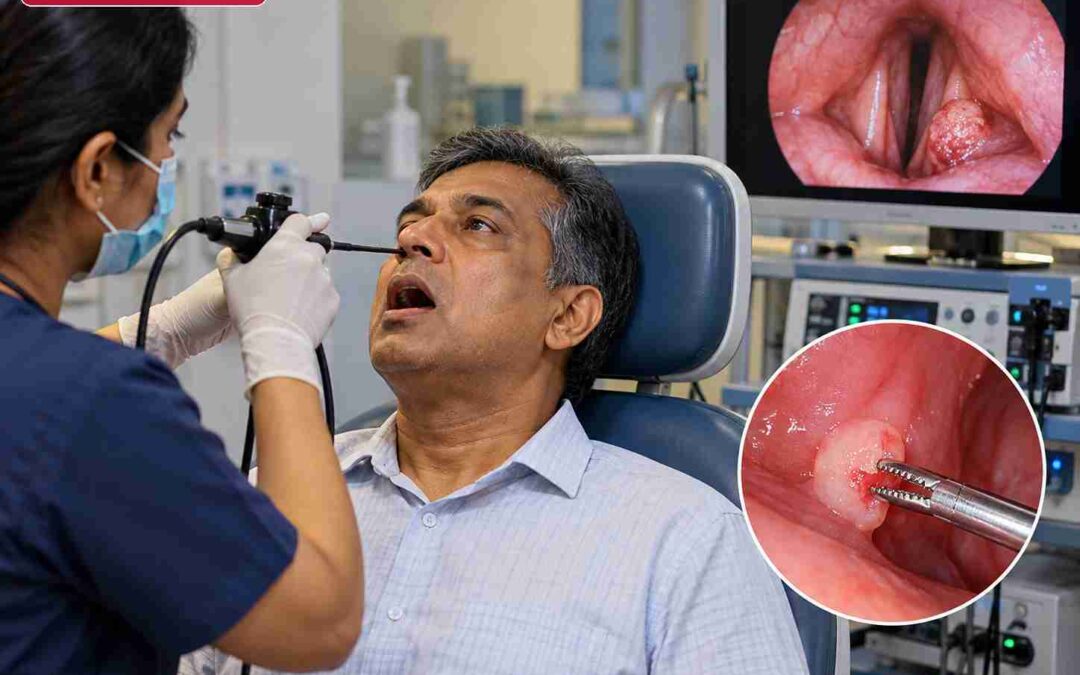
A nasal or throat endoscopy does not automatically require a biopsy. The procedure lets an ENT specialist examine areas that may not be visible during a routine exam. A tissue sample may be taken when the doctor sees a suspicious growth, polyp, lesion or other abnormal area, or when persistent symptoms require further investigation.
The decision depends on the findings during examination and the reason the endoscopy was recommended.
What Is a Nasal or Throat Endoscopy?
It is a procedure that uses a small camera to examine the inside of the nose, throat and related structures. It lets the ENT specialist see areas that may be difficult to assess during a standard examination.
What the ENT Specialist Sees During the Procedure
The camera provides a direct view of the tissues and structures being examined, helping the specialist identify abnormalities that may require further evaluation.
- Nasal passages: The examination can show swelling, inflammation, polyps or other visible changes.
- Throat: The specialist can assess the throat lining and identify abnormal areas.
- Voice-related structures: Depending on the examination, the specialist may also assess areas around the larynx and vocal cords.
- Abnormal findings: The specialist can evaluate any unusual growth, lesion, or tissue change more closely.
Is a Nasal or Throat Endoscopy Painful?
No, although some people may feel temporary discomfort or pressure.
- A local numbing medicine may be used to make the examination more comfortable.
- The doctor carefully inserts the camera through the appropriate passage.
- Mild irritation, watering eyes, or a gagging sensation can occur briefly.
- The experience can vary depending on the area being examined and individual sensitivity.
Why Would an ENT Specialist Recommend This Procedure?
When symptoms persist, recur or cannot be adequately explained through a routine examination.
Common Nasal Symptoms That Need Evaluation
- Blocked or stuffy nose
- Repeated nasal discharge
- Facial pressure or discomfort
- Recurring sinus-related symptoms
- Symptoms that do not improve as expected with initial treatment
Common Throat Symptoms That Need Evaluation
- Hoarseness of voice
- Difficulty swallowing
- Persistent throat discomfort
- Ongoing throat irritation
- Symptoms that continue despite initial treatment
When Does the Endoscopy Turn Into a Biopsy?
When abnormal tissue is found, or microscopic disease needs investigation despite a normal-looking digestive tract.
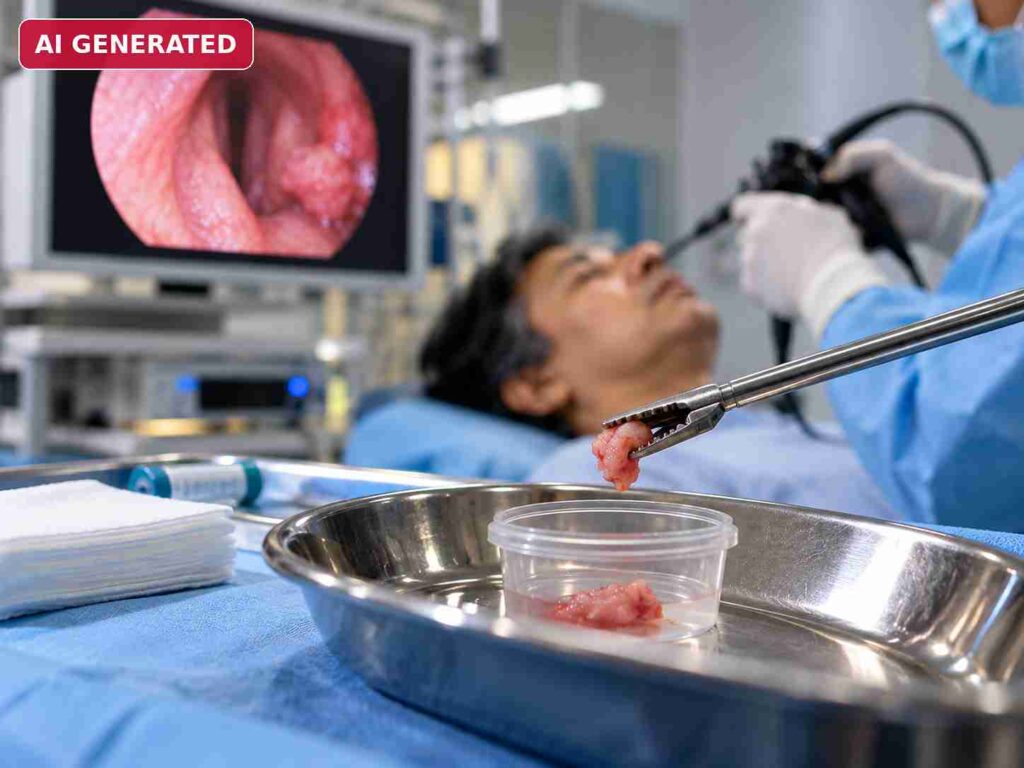
Suspicious Growths, Polyps, or Lesions
A biopsy may be performed when the endoscope reveals abnormal tissue requiring microscopic examination.
- Polyps: May be removed and tested for precancerous changes.
- Ulcers or lesions: Tissue can help identify infection, inflammation, or other causes.
- Inflammation: Samples may help diagnose conditions such as coeliac disease, Crohn’s disease, or gastritis.
Persistent Symptoms That Don’t Explain Themselves
Biopsies can detect microscopic abnormalities that endoscopy can’t see directly.
- Chronic diarrhoea: Sampling can identify microscopic colitis.
- Unexplained weight loss or difficulty swallowing: Tissue examination may reveal cellular abnormalities.
- Persistent reflux: Biopsy may assess tissue damage or conditions such as H. pylori infection.
Ruling Out Cancer in High-Risk Patients
Biopsies can detect precancerous or cancer-related cellular changes, including those not visible during routine endoscopy.
- Barrett’s oesophagus: Biopsies monitor cellular changes linked to long-term reflux.
- Chronic inflammation: Tissue sampling can monitor changes associated with increased cancer risk.
- Early detection: Microscopic abnormalities may be identified before a visible tumour develops
What Conditions Can a Nasal or Throat Biopsy Detect?
A biopsy can identify specific tissue changes that visual examination alone cannot confirm. The findings depend on the location and appearance of the sampled tissue.
Nasal Polyps and Chronic Sinus Conditions
A tissue sample may help distinguish certain inflammatory or other tissue changes when the clinical findings require confirmation.
- Nasal polyps: Tissue can be examined to characterise the polyps.
- Chronic inflammation: Long-standing inflammatory changes may be assessed microscopically.
- Unusual tissue: Areas that do not have a typical appearance may require further evaluation.
- The biopsy result is interpreted alongside symptoms and endoscopic findings.
Vocal Cord and Throat Growths
Laryngoscopy provides a direct view of the voice box and vocal cords, while biopsy can provide tissue-level information when an abnormal area needs further assessment.
- Vocal cord lesions: A clinician can examine an unusual area more closely.
- Throat growths: Tissue may be sampled when the appearance warrants laboratory evaluation.
- Microscopic examination: A pathologist examines the collected tissue for cellular changes.
- The final interpretation depends on both the tissue findings and the clinical context.
Infections and Inflammatory Conditions
Biopsy can sometimes help identify inflammatory or infectious changes when visual examination and other investigations do not provide enough information.
- Pathologists may examine tissue for characteristic inflammatory changes.
- Certain infections can produce specific tissue findings.
- Results can help distinguish different causes of abnormal tissue.
- The need for sampling depends on the clinical findings.
What Happens to the Tissue Sample After the Biopsy?
The sample is sent to a laboratory, where a pathologist examines it under a microscope for abnormal cellular or tissue changes. The findings are then interpreted alongside the endoscopy results and clinical history.
- Sample processing: The collected tissue is preserved and prepared for laboratory examination.
- Microscopic assessment: A pathologist examines the tissue for relevant cellular changes.
- Diagnostic information: The findings can help identify inflammation, infection, abnormal growth or other tissue changes.
- Clinical interpretation: The laboratory report is considered together with the specialist’s examination and other test results.
How Long Do Nasal or Throat Biopsy Results Take?
Results typically take 1 to 2 weeks to come back from the laboratory
What Happens During This Time?
- Sample preparation: Tissue is preserved, embedded in paraffin, sliced into ultra-thin sections, and stained for microscopic examination. This preparation often takes 24–48 hours.
- Pathology review: A pathologist examines the slides for infection, inflammation, or abnormal/cancerous cells.
- Special testing: If findings are unclear, immunohistochemistry or molecular tests may add several more days to the final result.
Is the Biopsy Itself Risky or Painful?
It is generally a safe, low-risk procedure that involves minimal pain because doctors use local anaesthesia and sedation to numb the area.
What to Expect During the Procedure
The specialist first examines the relevant area, then collects a small sample if tissue analysis is needed.
- The specialist performs the examination using the appropriate endoscopic equipment.
- Local anaesthesia may be used depending on the location and procedure.
- The specialist collects the sample from the area requiring further assessment.
- The tissue is then sent for laboratory analysis.
Aftercare and Recovery
- First 24 hours: Keep the original sterile dressing in place and avoid disturbing the wound.
- First 24–48 hours: Avoid heavy lifting and strenuous exercise to reduce bleeding or wound reopening.
- Days 1–10: Clean gently with mild soap and water, apply plain petroleum jelly, and cover with a fresh bandage daily.
- Until healed: Avoid swimming, baths, and hot tubs; showers are generally acceptable after 24–48 hours
When Should You Consult an ENT Specialist?
Persistent nasal or throat symptoms deserve medical assessment when they do not improve, recur frequently or are accompanied by concerning changes.
Watch Out For
- Persistent hoarseness or voice changes
- Ongoing difficulty swallowing
- Recurrent or persistent nasal symptoms
- A visible or suspected growth, polyp or lesion
- Symptoms that remain unexplained after initial evaluation
Quick Summary
A biopsy is not automatically part of every endoscopic examination. Consider it when the specialist identifies tissue that requires microscopic evaluation or when clinical findings warrant further investigation.
- Endoscopy provides a direct view of the nasal and throat structures.
- Persistent symptoms may require closer examination when the cause remains unclear.
- Abnormal growths, polyps and lesions may be sampled when necessary.
- A pathologist examines the collected tissue.
- Results help guide further diagnosis and treatment.
- The need for sampling depends on the individual examination findings.
When Should You Consult an ENT Specialist?
Don’t ignore persistent nasal or throat symptoms that continue without a clear explanation. An appropriate examination can determine whether endoscopy, tissue sampling or other investigations are necessary.
If symptoms are persistent, recurrent, or unexplained, you can visit our clinic in Mukundapur and speak to our ENT specialists for a proper evaluation.
Call today to schedule a visit.
People Also Ask
Does every nasal or throat endoscopy require a biopsy?
No. Most examinations involve directly inspecting the tissues. Sampling is considered only when the specialist identifies an area that requires additional laboratory evaluation.
Is a biopsy taken during nasal or throat endoscopy painful?
Usually, discomfort is mild and temporary. Local numbing medicine may be used, depending on the location, technique and individual procedure. Some irritation or minor bleeding can occur afterwards.
How long does it take to get nasal or throat biopsy results?
The timeframe varies according to laboratory processing and whether additional testing is needed. Routine microscopic assessment may take several working days, while complex cases can take longer.
Can a nasal or throat biopsy detect cancer early?
Yes. Microscopic examination can identify cancerous or precancerous cellular changes in sampled tissue. Early detection depends on evaluating suspicious findings and investigating promptly.
What symptoms should prompt a visit to an ENT specialist?
Assess persistent or unexplained symptoms, particularly ongoing voice changes, swallowing difficulty, recurrent nasal problems, visible abnormalities, or symptoms that do not improve with initial treatment.