
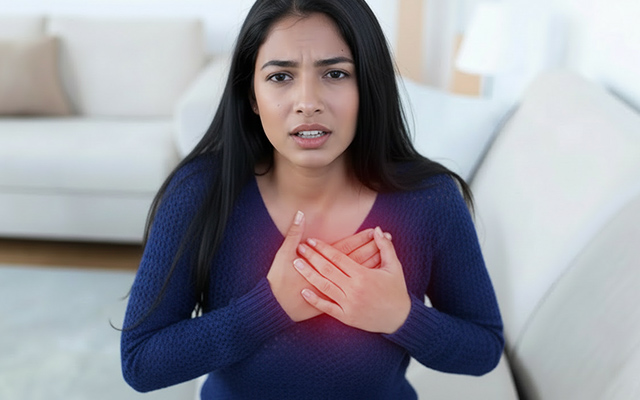
In the hustle of everyday lifestyle where life moves at a fast pace, it is easy to dismiss sudden chest discomfort as “just due to humidity.” Similarly, many people mistakenly think breathlessness is “gas from last night’s food.”
Your heart doesn’t always scream when it’s in trouble; sometimes, it whispers.
Ignoring these whispers can be the difference between a routine check-up and a life-altering emergency.
Long Life Speciality Clinic is here to provide expert care and guidance, ensuring you don’t miss those crucial signals.
This blog will help you understand when to act, what to expect, and why every second counts when it comes to chest pain or minor discomfort.
Does chest pain always mean a heart attack?
Not every chest twinge is a sign of a cardiac event. However, the overlap between “harmless” conditions and life-threatening ones is significant.
What Heart-Related Pain Feels Like
When a heart specialist asks you to describe these symptoms, they are looking for specific cues, as cardiac pain (angina) is rarely a “sharp” or “stabbing” sensation.
Instead, it feels like:
- Tightness or squeezing.
- A dull, heavy ache.
- A burning sensation that feels like indigestion but doesn’t improve with antacids.
Non-Heart Causes vs. Cardiac Symptoms
| Non-Heart Causes | Cardiac Symptoms |
| Often linked to digestive issues, stress, or anxiety | Chest pain, pressure, or tightness |
| Shortness of breath after heavy meals or anxiety | Shortness of breath with physical exertion or at rest |
| Can be caused by muscular strain or posture issues | Dizziness or lightheadedness with chest discomfort |
| Frequently associated with indigestion or gas | Rapid or irregular heartbeat |
| Pain tends to be intermittent and mild | Pain may radiate to the arm, jaw, or back |
| Usually worsens after eating or physical stress | May be accompanied by nausea or sweating |
Important Note
If you take an antacid and the “heartburn” persists for more than 15 minutes, or is accompanied by breathlessness, it is no longer an “acidity” issue; it is a medical priority.
Why Seeing a Heart Specialist Can Change Outcomes
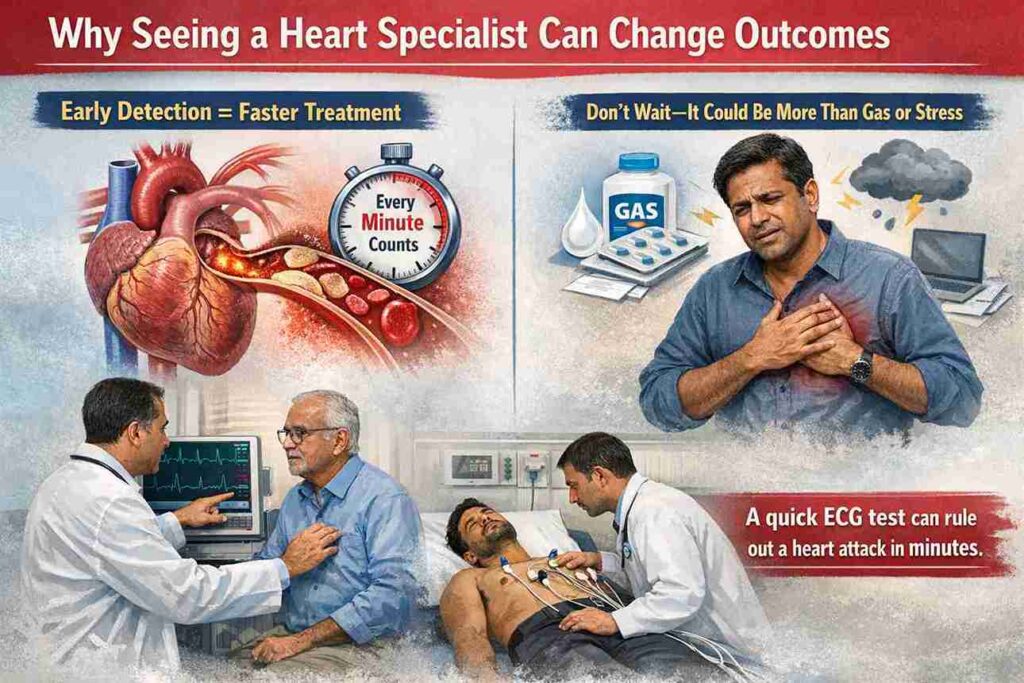
Every minute that a heart artery is blocked, heart muscle fibres begin to die.
Early Detection = Faster Treatment
The sooner you consult a specialist for chest pain treatment in Kolkata, the more options you have. Early intervention can involve simple lifestyle changes or medication, preventing the need for invasive surgeries later.
The “Gas” and “Stress” Trap
In many Indian households, there is a cultural tendency to blame chest discomfort on “gastric issues” or “work stress.” While these may be factors, using them as excuses to delay a doctor’s visit is dangerous.
A quick ECG test for chest pain can rule out a heart attack in minutes, a much safer bet than waiting for a digestive pill to work.
Who Should Be Extra Cautious?
Certain factors put you at a higher “baseline” risk for cardiac issues. If you fall into these categories, you should visit a cardiologist immediately.
| Risk Factor | Why it Matters |
| Diabetes | High blood sugar damages nerves; you might not even feel “pain” during a heart attack (Silent MI). |
| High Blood Pressure | Forces the heart to work harder, thickening the muscle and weakening it over time. |
| Smoking | Chemicals in tobacco smoke cause blood to thicken and form clots inside veins and arteries. |
| Family History | If a close relative had heart disease before age 55 (men) or 65 (women), your genetic risk is higher. |
| Sedentary Lifestyle | Lack of movement combined with high-stress “corporate” life is a major trigger for early heart issues. |
What a Heart Specialist May Do on Your First Visit?
Walking into a clinic can be intimidating, but a cardiac evaluation is usually straightforward and non-invasive.
- Vitals & History: The doctor will check your BP, heart rate, and ask detailed questions about your lifestyle and when the symptoms occur.
- ECG (Electrocardiogram): A 5-minute test that records the electrical activity of your heart. It’s the first line of defence in spotting an active or past heart attack.
- Blood Tests (Troponin): A troponin test for a heart attack looks for specific proteins released when the heart muscle is damaged.
- Echocardiogram (Echo): An ultrasound of the heart to see how well the valves are working and how the blood is pumping.
- Advanced Testing: If the doctor sees irregularities, they may suggest a CT coronary angiography or a traditional coronary angiography to look for arterial blockages.
If you are searching for the best heart specialist in Mukundapur, consult Long Life Speciality Clinic to get proper guidance.
Emergency Alert: Don’t Wait, it’s Time to Take Immediate Action
Don’t Guess. Here’s When It’s an Emergency (Act Now)
When it comes to the heart, uncertainty is your biggest enemy. We often try to rationalise pain to avoid “making a scene” or going to the hospital for nothing. But with heart health, it is always better to be told it’s nothing than to ignore something serious.
Call Emergency Services or Go to the ER if You Have Chest Pain With These Signs:
- Pain/Pressure That Doesn’t Go Away: A sensation of an elephant sitting on your chest, or a crushing pressure that lasts more than a few minutes.
- Radiating Pain: Discomfort that isn’t just in the centre of the chest but spreads to your left arm, jaw, neck, or back.
- Systemic Symptoms: If the pain is accompanied by drenching cold sweats, nausea, sudden dizziness, or an overwhelming sense of doom.
Severe Breathlessness is Also an Emergency
Shortness of breath (dyspnea) can be just as significant as chest pain. Seek immediate help if you experience:
- Sudden trouble speaking in full sentences.
- Gasping for air while sitting still.
- A feeling of “air hunger” combined with a heavy or tight chest.
A Quick 60-Second Checklist
If you are heading to see a heart specialist, have this info ready:
- Emergency Red Flags: Are you sweating? Is the pain moving to the jaw?
- Timing: When did the pain start? Does it come and go?
- Triggers: Does it happen when you walk or when you are resting?
- Medication List: Bring a list of all current supplements and medicines.
- Risk Factors: Know your last BP and sugar readings.
- Family History: Be ready to mention any history of “sudden death” in the family.
Don’t Wait for a “Better Time”
Your heart is the engine of your life. While it’s easy to prioritise work, family, or social commitments, none of those is possible without a healthy heart. If your symptoms are new, recurring, or simply making you feel uneasy, it is time to stop searching and start acting.
Whether it’s a routine screening or an urgent concern, getting evaluated by a top-tier heart specialist is the smartest move you can make today.
Book a consultation at Long Life Speciality Clinic with the best heart specialist in Mukundapur. Call +91 8334073407 today.
People Also Ask
1. Can acidity feel like a heart problem?
Yes. Acid reflux can cause a burning sensation in the chest (heartburn). However, acidity usually doesn’t cause breathlessness or arm pain. If in doubt, get an ECG.
2. Does shortness of breath always mean heart disease?
No, it could be lung issues (like asthma or COPD) or even anaemia. However, because the heart and lungs work together, a heart specialist must first rule out cardiac failure.
3. What should I do if chest pain lasts more than 10–15 minutes?
Stop all physical activity, sit down, and call for medical help immediately. Do not wait for it to subside on its own.
4. Can young people have heart problems?
Unfortunately, yes. Due to sedentary lifestyles and high stress, we are seeing an increase in heart attacks among people in their 20s and 30s in urban India.
5. Which test confirms a heart attack?
A combination of an ECG and a Troponin blood test is the standard way to confirm if the heart muscle is currently being damaged.