

Arm pain can start in the shoulder, elbow, wrist or hand. It may be sharp, dull, burning or tingling. Overuse and injury are the most common causes. Some causes fade with rest. Others get worse over time. This guide explains the causes, tests and treatments. It also shows the warning signs that need a doctor.
| Question | Short answer |
| Most common causes | Overuse, tendon inflammation, nerve pressure, sprains |
| Can it go away on its own? | Mild strain often settles in a few days with rest |
| Which doctor to see? | An orthopaedic doctor first |
| Emergency signs | Deformity, chest pain, breathlessness, sudden weakness |
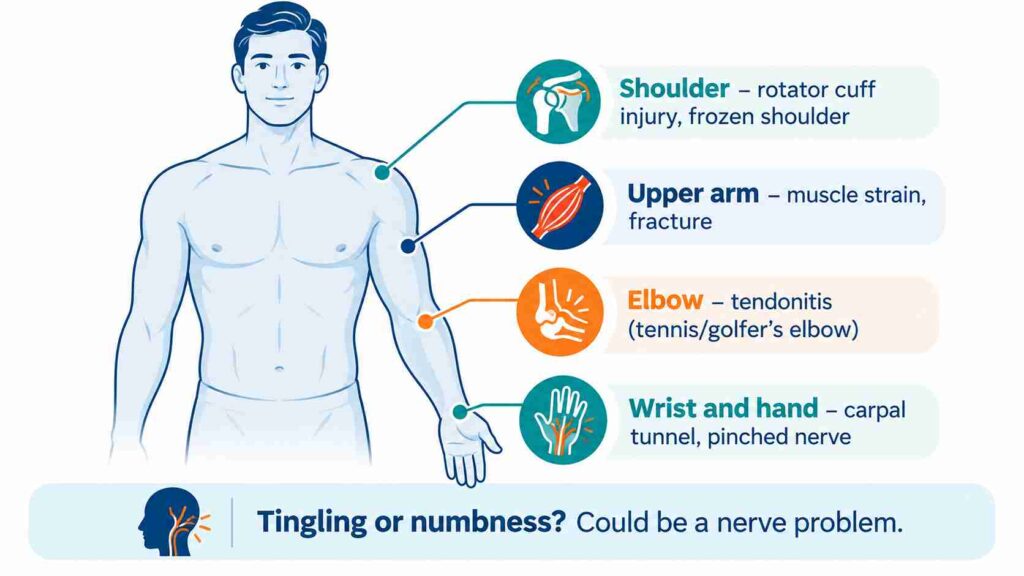
What Causes Arm Pain?
Arm pain has many causes. The table shows the most common ones.
| Cause | Where it hurts | Typical symptoms |
| Pinched nerve | Neck to hand | Tingling, numbness, sharp pain, weakness |
| Tendonitis | Shoulder, elbow, wrist | Dull ache, tenderness, mild swelling |
| Rotator cuff injury | Shoulder and upper arm | Dull pain, weakness when lifting |
| Sprain or strain | Any joint or muscle | Swelling, bruising, limited movement |
| Fracture | Site of injury | Severe pain, deformity, bruising |
| Rheumatoid arthritis | Joints, often both sides | Swelling, stiffness, tiredness |
Pinched Nerve
A nerve gets squeezed by bone, cartilage, muscle or tendon. This often happens in the neck, elbow or wrist.
- Tingling or “pins and needles”
- Numbness in the fingers
- Sharp or shooting pain
- Muscle weakness
Tendonitis
Tendons connect muscle to bone. They become inflamed from repeated movement. It often affects the wrist, elbow and shoulder.
- Dull, aching pain
- Tenderness near the joint
- Mild swelling
Rotator Cuff Injury
The rotator cuff keeps your shoulder joint steady. Overhead work, painting or throwing can injure it.
- Dull shoulder pain
- Pain that spreads down the arm
- Weakness when lifting the arm
Sprains and Strains
A sprain stretches or tears a ligament. A strain affects a muscle or tendon. Both can follow a fall, a twist or a sudden pull.
- Swelling and bruising
- Pain with movement
- A stiff or unstable joint
Mild cases often improve with rest and support. Severe tears may need surgery.
Broken Bones
A fracture causes sudden, severe pain. You may hear a snap at the time of injury.
- Visible bend or deformity
- Swelling and bruising
- Trouble turning the palm
Rheumatoid Arthritis
This is a long-term condition where the immune system inflames the joints. It can affect the wrists, elbows and shoulders.
- Swollen, warm joints
- Morning stiffness
- Tiredness
Other Causes of Arm Pain
- Carpal tunnel syndrome (pressure on a wrist nerve)
- Tennis or golfer’s elbow
- Frozen shoulder
- Neck spine wear (cervical spondylosis)
Neck problems often show up as arm pain. Read our guide on whether neck or shoulder pain is linked to posture.
Arm Pain With Tingling or Numbness: Is It a Nerve Problem?
Tingling or numbness often points to a nerve. The problem may be in your neck, elbow or wrist. The area where the tingling spreads gives a clue.
- Thumb to ring finger: often the wrist (carpal tunnel)
- Little finger and ring finger: often the elbow
- Pain from the neck down the arm: often a nerve root in the neck
Do not ignore numbness that lasts for days. A nerve study such as EMG/NCV can show which nerve is affected. A neurologist may also advise you.
Left Arm Pain: When Is It Heart-Related?
Most arm pain comes from muscles, joints or nerves. But left arm pain can sometimes signal a heart problem.
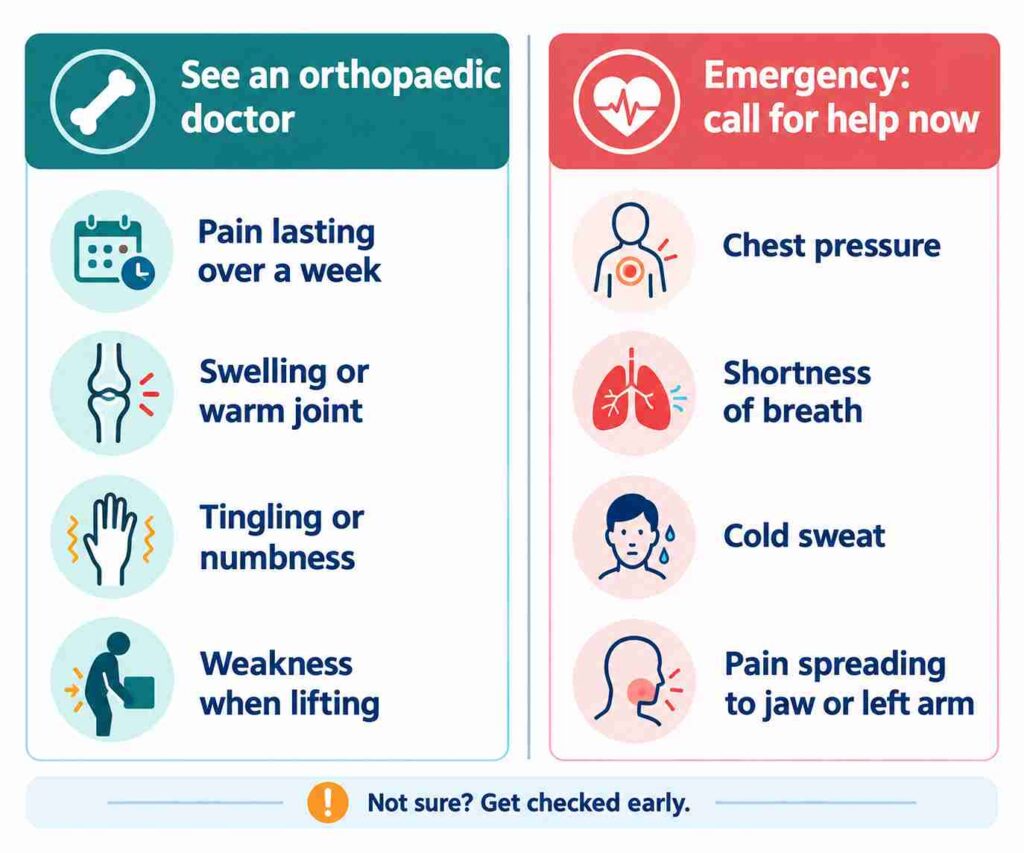
Get emergency help if arm pain comes with:
- Chest pressure, tightness or pain
- Shortness of breath
- Cold sweat or nausea
- Dizziness or sudden weakness
- Pain spreading to the jaw or back
Do not wait or drive yourself. Call an ambulance or go to the nearest emergency room.
If you get repeated left arm pain on exertion, see a cardiologist. A simple ECG is often the first test.
How Do Doctors Find the Cause of Arm Pain?
The doctor starts by asking when the pain began and what makes it worse. Then they examine your neck, shoulder, elbow, wrist and hand. They may advise tests.
| Test | What it checks |
| X-ray | Fractures, joint wear, bone changes |
| USG (ultrasound) | Tendons, muscles, fluid around joints |
| EMG/NCV | Nerve and muscle function |
| Blood tests | Arthritis and inflammation markers |
| ECG | Heart rhythm, if a heart cause is possible |
How Is Arm Pain Treated?
Treatment depends on the cause. Your doctor will pick the simplest option that works.
| Cause | Common first treatment |
| Tendonitis | Rest, ice, physiotherapy |
| Mild sprain or strain | Rest, support, gentle movement |
| Pinched nerve | Posture correction, medicines, physiotherapy |
| Rotator cuff injury | Physiotherapy, sometimes injections |
| Fracture | Cast or splint, sometimes surgery |
| Rheumatoid arthritis | Long-term medicines under specialist care |
Home Care for Mild Arm Pain
- Rest the arm for a day or two
- Apply an ice pack for 10 to 15 minutes
- Use a sling or wrap if advised
- Avoid heavy lifting
- Return to movement slowly
Home care is only for mild pain. See a doctor if it does not improve in a few days.
Medicines for Arm Pain
Your doctor may prescribe pain relievers for severe pain. If inflammation is the cause, they may add anti-inflammatory medicines. Do not self-medicate for long periods.
Injections for Arm Pain
Some cases need corticosteroid injections near the painful joint or tendon. They reduce inflammation and ease pain. Your doctor will decide if you need one.
Physiotherapy for Arm Pain
Physiotherapy rebuilds strength and movement. It helps after an injury, surgery or long-term strain. Our physiotherapy team can build a plan for you.
Surgery for Arm Pain
Surgery is needed only when other treatments fail. It may be advised for:
- Torn ligaments or tendons
- Displaced fractures
- Severe nerve compression
Physiotherapy usually follows surgery to restore movement.
How Can You Prevent Arm Pain?
- Take a break from typing every 30 to 45 minutes
- Keep your wrists straight while typing
- Set your screen at eye level
- Warm up before sport or heavy work
- Lift with both hands and share the load
- Strengthen your shoulders and upper back
When Should You See a Doctor for Arm Pain?
See an orthopaedic doctor if you have:
- Pain lasting more than a week
- Pain that wakes you at night
- Swelling, redness or warmth in a joint
- Tingling or numbness that keeps returning
- Weakness while lifting or gripping
Go to emergency care if you have:
- A bent or deformed arm or wrist
- Severe pain after a fall or accident
- Inability to turn or bend the arm, fingers or hand
- Chest pain, breathlessness or sweating with arm pain
You can book a consultation with an orthopaedic doctor at Long Life Clinic. They will find the cause and suggest the right treatment.
[IMAGE 2 HERE] Alt text: Infographic comparing orthopaedic arm pain signs with emergency heart warning signs.
FAQs About Arm Pain
Which doctor should I see for arm pain?
Start with an orthopaedic doctor. They treat bones, joints, tendons and nerves. They may refer you to a cardiologist or neurologist if needed.
Can arm pain go away on its own?
Mild pain from overuse often settles in a few days with rest. Pain that lasts over a week or keeps returning needs a check-up.
Is left arm pain always a heart attack?
No. Most left arm pain comes from muscles, nerves or joints. But chest pain, sweating or breathlessness with it needs emergency care.
What is the fastest way to relieve arm pain?
Rest, ice and gentle support help mild pain. Avoid heavy use. If pain is severe or comes with numbness, see a doctor instead of waiting.