

You have gone through an ultrasound and found out you are going to have twins. While this brings joy and excitement, it also needs more attention than carrying one baby. Many people in Kolkata do not realise that an ultrasound does much more than just confirm the number of babies; it also helps doctors understand how to manage the pregnancy.
If you’ve discovered you’re expecting twins or are wondering if your pregnancy needs closer attention, this blog is here to guide you. It explains, in simple terms, how ultrasound helps detect and monitor multiple pregnancies, what doctors look for during scans, and why early clarity matters.
What is a multiple pregnancy?
A multiple pregnancy means carrying more than one baby at the same time. The most common type is twins, though some pregnancies involve triplets or more.
Twins, triplets, and more
In simple terms, the name depends on the number of babies. Two babies mean twins. Three babies mean triplets. Anything beyond that is grouped as higher-order multiples. Most families encounter twin pregnancies, which is why they are discussed more often.
What parents often don’t realise is that carrying more than one baby increases physical demand. This doesn’t mean something is wrong, but it does mean the pregnancy needs closer attention.
A multiple pregnancy means:
- More tiredness for the mother
- More frequent medical check-ups
- More planning compared to a single pregnancy
How does ultrasound confirm more than one baby?
Symptoms alone cannot confirm the presence of twins or triplets. Only ultrasound gives a clear and reliable answer. A pregnancy ultrasonography test in Mukundapur can provide the most accurate insight into your pregnancy, allowing doctors to detect multiple babies early on.
Why do physical signs often confuse?
Many people believe strong nausea, faster weight gain, or a larger belly automatically means twins. In reality, pregnancy symptoms vary widely. Some single pregnancies feel intense, while some twin pregnancies feel mild at first.
Relying on symptoms often creates unnecessary worry.
Common signs that often mislead people :
- Severe morning sickness
- Faster weight gain
- Feeling more exhausted than others
- Comments from friends or relatives
How ultrasound provides clarity
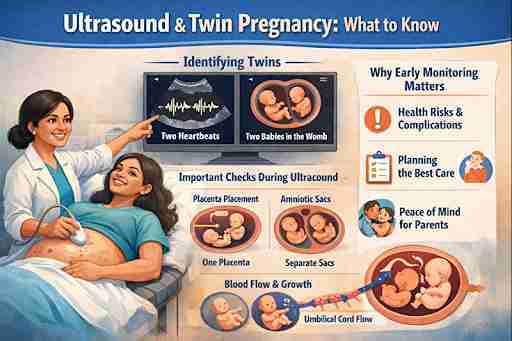
Ultrasound allows doctors to see what is happening inside the womb. It shows the number of babies, their heartbeats, and their development. This clarity is why early scans are central to detecting multiple pregnancies in India.
When are twins or triplets detected on ultrasound?
Most multiple pregnancies are detected early. The first scan often provides the first clear answer. In most cases, twins or triplets are detected between 6 and 12 weeks of pregnancy.
What doctors look for during the scan
During the scan, doctors don’t just look for babies. They carefully assess several details.
They usually check:
- Number of pregnancy sacs
- Number of heartbeats
- Position of the babies
This is why a pregnancy ultrasound test is often recommended early to ensure accurate planning. At Long Life Speciality Clinic in Mukundapur, ultrasound scans are performed with careful attention to these details,
Why do doctors check the placenta and sac sharing?
Doctors check the placenta and sac to understand how the babies are growing and how they are receiving nutrition inside the womb. This information helps doctors decide how closely to monitor the pregnancy.
In some multiple pregnancies, each baby has its own placenta and space. In others, babies may share the same placenta or sac. When babies share these support systems, doctors need to be more careful, as both babies depend on the same source of nutrition and oxygen.
Checking the placenta and sac sharing helps doctors to
- Understand how nutrients and blood are shared between babies
- Decide how often ultrasound scans are needed
- Watch for growth differences between babies
- Reduce unexpected complications by monitoring early
Types of multiple pregnancies
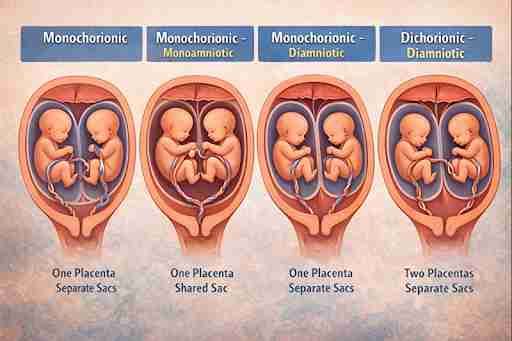
Not all twin or triplet pregnancies are the same. The type affects how closely doctors monitor the pregnancy.
Here is the simple explanation of the types (Source)
| Type of Twin Pregnancy | What It Means | Are the Twins Identical? |
| Monochorionic Twins | Both babies share a single placenta, but they may have separate spaces within the womb. | Not always identical |
| Monochorionic-Monoamniotic Twins | Both babies share the same placenta and the same space (sac) inside the womb. | Always identical |
| Monochorionic-Diamniotic Twins | Both babies share one placenta but have separate spaces (sacs). | Always identical |
| Dichorionic-Diamniotic Twins | Each baby has its own placenta and its own space inside the womb. | Usually non-identical, but sometimes identical |
Are multiple pregnancies riskier than a single pregnancy?
Some risks are higher compared to a single pregnancy. However, many multiple pregnancies progress well with proper care.
Let’s clear your worries:
Common concerns doctors monitor
Doctors keep an eye on growth differences, signs of early labour, and nutritional needs. These concerns often fall under twins and triplets, but early monitoring helps manage them safely.
Doctors usually monitor
- Differences in baby growth
- Signs of early delivery
- Mother’s overall strength and nutrition
Why regular monitoring makes a difference
Frequent check-ups allow doctors to act early if needed. This careful approach supports managing twin pregnancy complications without panic or fear.
What are common myths about twins and triplets?
Many families hear different stories about twins and triplets from relatives, neighbours, or social media. These stories are often shared casually, but they can create unnecessary worry for expecting parents.
Below are some common myths, explained with facts in a simple manner:
Myth 1: A bigger belly or stronger nausea always means twins or triplets
People often assume that visible body changes or intense morning sickness point to a multiple pregnancy. In reality, every woman’s body reacts differently during pregnancy.
Fact: Only an ultrasound scan can confirm twins or triplets. Physical symptoms alone cannot.
Myth 2: Twin or triplet pregnancies are always dangerous
This belief can cause fear as soon as people hear the words “twins” or “triplets.”
Fact: Many multiple pregnancies progress smoothly with regular check-ups, good nutrition, and timely scans.
Myth 3: Twins are always born early
Some believe that carrying more than one baby always leads to very early delivery.
Fact: With proper medical care, many twin pregnancies continue safely until doctors feel delivery is appropriate.
Myth 4: A shared placenta means serious problems
Hearing about shared placentas often creates panic before parents understand what it means.
Fact: A shared placenta only means closer monitoring is needed. With regular ultrasounds, doctors manage this safely.
Myth 5: Mothers carrying twins must stay on complete bed rest
This myth often leads to unnecessary stress and lifestyle restrictions.
Fact: Most women can continue daily routines with adjustments, based on their doctor’s guidance.
Moving ahead with clarity and confidence
Understanding how ultrasound helps identify and monitor twins or triplets removes fear and confusion from the pregnancy journey. With timely scans and the right medical guidance, parents can plan care early and feel more confident at every stage.
Accurate information and regular monitoring allow families to focus on health, preparation, and peace of mind rather than uncertainty.
For reliable guidance and accurate Pregnancy Ultrasonography Test in Mukundapur, consult the specialists at Long Life Speciality Clinic, call +91 83340 73407 to book your scan.
People Also Ask (FAQs)
When are twins usually detected on ultrasound?
Twins are usually detected between 6 and 12 weeks using an ultrasound.
Are twin pregnancies always risky?
Not always. Many twin pregnancies progress safely with monitoring.
How often are scans needed for twins?
Twin pregnancies usually need more frequent scans than single ones.
Are triplets detected early in pregnancy?
Yes. Triplets are often visible early during the first ultrasound.