
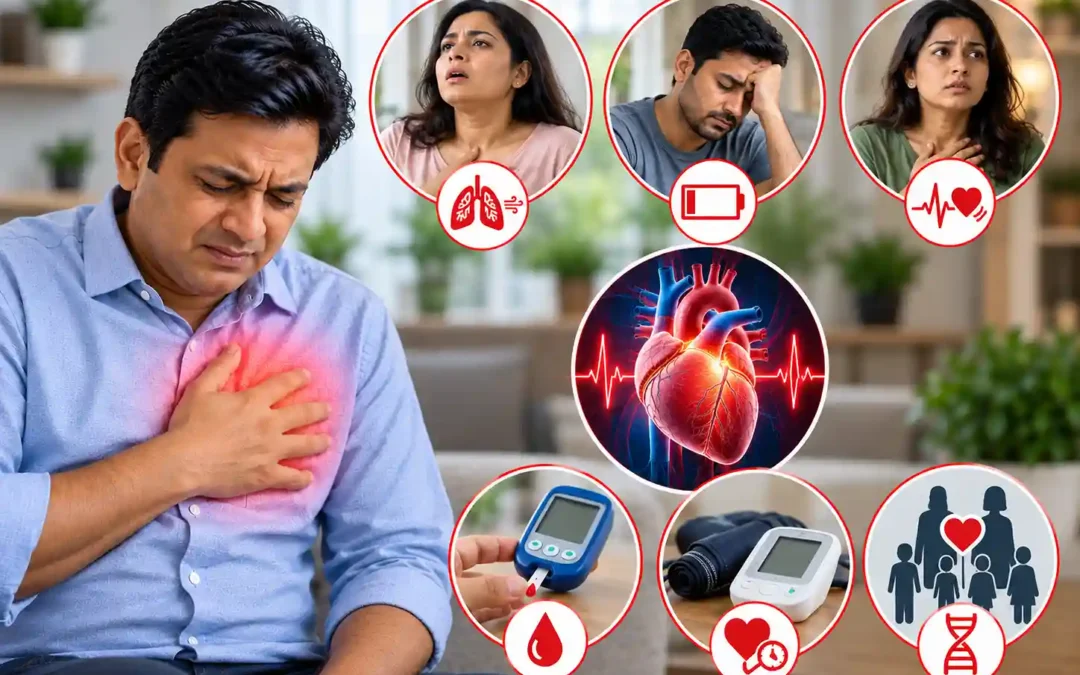
While women can experience chest pain during a heart attack, they are more likely to present with less obvious symptoms. These include unusual fatigue, nausea, shortness of breath, and pain in the jaw, neck, or back.
In contrast, men are more likely to experience classic symptoms, such as sudden, crushing chest pain that radiates down the left arm.
These differences in how early symptoms manifest in women are a primary reason why their cardiovascular events are frequently unrecognised, misdiagnosed, or treated much later than those in men.
What Are the Common Heart Attack Symptoms in Women?
Although crushing chest pain is the classic hallmark of cardiovascular distress, a woman’s experience is much more subtle. Many experience other symptoms with or without it, so it’s critical to recognise early signs that deviate from typical male patterns.
Be alert for these common symptoms:
- Chest pressure, squeezing, fullness, or tightness.
- Pain radiating to the jaw, neck, back, or shoulder.
- Shortness of breath or difficulty catching your breath.
- Nausea, vomiting, or severe indigestion.
- Unexplained cold sweats or clamminess.
- Unusual tiredness or exhaustion, sometimes starting days beforehand.
- Sudden dizziness, lightheadedness, or fainting.
- Discomfort or a burning sensation in the upper stomach.
Recognising these symptoms promptly and seeking emergency medical care can prevent severe cardiac damage and save lives.
Heart Attack Symptoms in Men: What Are the Classic Signs?
When a cardiovascular event strikes, men typically experience sudden, heavy chest pain that radiates down the left arm, frequently accompanied by profuse sweating and severe breathlessness.
These hallmark symptoms include:
- Intense, crushing pressure or squeezing in the centre of the chest.
- Sharp discomfort spreading to the left shoulder, neck, or jaw.
- Sudden cold sweats and unexplained dizziness.
However, these classic signs can also occur in women, and not every man experiences them. Many men may have subtler symptoms or even silent heart attacks.
Women vs Men: How Do Heart Attack Symptoms Differ?
The primary difference lies in how symptoms cluster and present. Chest pain or discomfort is the most common heart attack symptom in both men and women.
Up to 70% of women experience chest pressure or tightness, while 30% experience atypical symptoms [Source]. These include extreme fatigue, nausea, and breathlessness, sometimes without classic crushing chest pain.
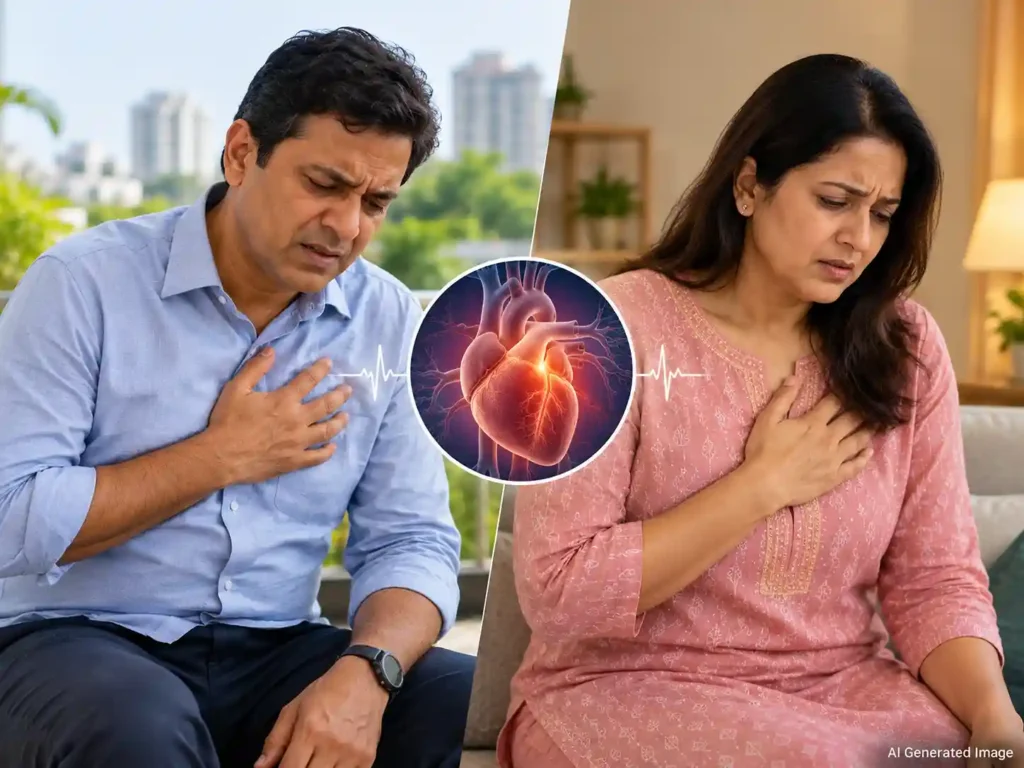
Comparison Table – Why Symptoms Differ
| Symptom | Women | Men |
| Chest pain | May experience subtle pressure, tightness, or no chest pain | Often experience sudden, crushing chest pressure |
| Other pain areas | Neck, jaw, throat, upper back, or either arm | Pain may spread to the shoulder and arm |
| Breathing | Shortness of breath, sometimes without chest pain | Breathlessness may accompany chest pain |
| Stomach symptoms | Nausea, vomiting, indigestion, or upper abdominal discomfort | May experience nausea or indigestion |
| Fatigue | Unusual or overwhelming exhaustion, sometimes preceding the event | Fatigue may also occur |
| Onset speed | Symptoms may develop gradually or suddenly | Symptoms may develop gradually or suddenly |
Remember that either sex can experience any of these symptoms. Suspected heart attack symptoms require immediate emergency medical attention.
Why Are Heart Attack Symptoms Often Missed in Women?
As women’s symptoms are often vague, they can be mistaken for everyday stress, acidity, indigestion, or the normal aches of ageing. As a result, women often delay seeking medical help.
Furthermore, women can experience a silent heart attack. [Source].
This means the event occurs with very mild symptoms—such as feeling like you have a minor bout of flu or a pulled muscle—or with no noticeable signs at all.
Doctors often discover these episodes later during a routine test, such as an ECG.
Is It a Heart Attack or Just Acidity?
If your discomfort spreads to your arm, jaw, or back; is accompanied by sweating or breathlessness; or doesn’t ease with rest or antacids, treat it as a potential medical emergency.
Distinguishing ‘heart attack vs acidity’: A comparison table!
| Likely Acidity | Likely a Heart Attack |
| Burning sensation rising into the chest or throat | Oppressive pressure, squeezing, or fullness in the chest |
| Sour or bitter taste in the mouth or regurgitation | Unexplained cold sweats, dizziness, or nausea |
| Symptoms that worsen when lying down or bending over | Shortness of breath without an obvious cause |
Never attempt to self-diagnose. An emergency medical evaluation, including an ECG and other appropriate tests, is necessary to determine whether a heart attack is occurring.
Which Women Are at Higher Risk of a Heart Attack?
Understanding specific risk factors in women is crucial because certain medical conditions and lifestyle habits can increase the likelihood of a cardiovascular event.
Key contributors to an elevated risk profile include:
- Diabetes, which can affect cardiovascular health differently in women and men.
- High blood pressure and high cholesterol.
- Smoking and substance use.
- Family history of early heart disease.
- Menopause and related hormonal changes.
- Polycystic ovary syndrome (PCOS) or a history of pregnancy complications, such as preeclampsia.
- Obesity, chronic stress, and a sedentary lifestyle.
A woman’s cardiovascular risk can increase after menopause, partly due to declining estrogen levels and changes in other risk factors.
What Should You Do If You Suspect a Heart Attack?
If you recognise the warning signs, call emergency services immediately. Do not drive yourself to the hospital.
Take these critical steps while waiting for help:
- Call emergency services right away to get paramedics on their way.
- Sit down and rest in a comfortable position.
- Chew aspirin only if emergency personnel or a healthcare professional advises it, and only if you have no allergies or contraindications.
- Loosen tight clothing around your neck and chest to ease discomfort.
Which Tests Check Your Heart Health?
An ECG is often one of the first tests during a cardiac evaluation, followed by an ECHO, stress test (TMT), Holter monitor, or lipid profile if needed.
Crucial diagnostic tests of a comprehensive heart checkup for women include:
- ECG: Records the heart’s electrical activity to help detect rhythm abnormalities and signs of heart injury.
- ECHO: Uses sound waves to create images of the heart’s valves and pumping action.
- Stress Test (TMT): Checks how the heart responds to physical exercise on a treadmill.
- Holter Monitor: Tracks the heart’s rhythm continuously, typically for 24 to 48 hours.
- Lipid Profile: Measures cholesterol and other fats in the blood.
Your cardiologist will determine which tests are appropriate based on your symptoms, medical history, and risk factors.
When Should You See a Cardiologist?
If or when you experience recurring chest discomfort, unexplained breathlessness, unusual fatigue, or heart palpitations.
It is also wise to schedule a consultation if you have significant risk factors, such as diabetes, high blood pressure, or a strong family history of heart disease, even if you currently have no symptoms.
Consider scheduling a consultation in these situations:
- Persistent unexplained symptoms: You frequently experience dizziness, fainting spells, or unexplained shortness of breath.
- Managing chronic risk conditions: You require specialised guidance to protect your heart while living with diabetes, high blood pressure, or high cholesterol.
- Family medical history: A close relative experienced a premature heart attack or stroke.
- Starting a new intense exercise regimen: You plan to begin high-intensity workouts after a sedentary period, particularly if you are over 40.
Final Verdict:
Recognising the warning signs of a heart attack can save your life. Never ignore unusual symptoms and get your heart checked immediately.
If you are in Mukundapur or nearby and need a comprehensive heart checkup, consult experienced cardiologists for an accurate evaluation.
Ready to take charge of your health? Enquire about consultation slots and timings!
FAQs
What are the first signs of a heart attack in women?
Early warning signs may include unusual fatigue, mild breathlessness, nausea, and subtle upper-body discomfort, sometimes occurring days before a heart attack.
Can a woman have a heart attack without chest pain?
Yes. Common indicators may include nausea, back pain, shortness of breath, or sudden lightheadedness.
How can I tell if my chest pain is acidity or a heart attack?
Symptoms may include pain radiating to the jaw or arm, sweating, and breathlessness. Acidity often causes burning and worsens when bending over, but symptoms can overlap.
Do heart attack symptoms in women change after menopause?
Menopause can increase cardiovascular risk as estrogen levels decline. However, heart attack symptoms vary, and both typical chest pain and less obvious symptoms may occur.
Which test should a woman take to check her heart health?
An ECG records the heart’s electrical activity, while a doctor may recommend an echocardiogram, treadmill test, or lipid profile based on symptoms and risk factors.
Medical Disclaimer:
This content is for informational purposes only and does not replace professional medical advice, diagnosis, or treatment. Seek immediate emergency medical care if you suspect a heart attack.